 ChipApex | Global Electronic Components Supplier
SEARCH
Search Product
Search Post
— IC芯片 | 连接器 | 传感器 | 被动器件 —
Search productSearch post
— IC芯片 | 连接器 | 传感器 | 被动器件 —
Consult the customer manager about the wholesale price.
consultation hotline:86-132-6715-2157
email:[email protected]
Contact the product manager for consultation. One-stop consultation is available.
Do you want a lower wholesale price? Please send us your inquiry and we will reply immediately.
The TL4050A25QDBZR is a precision micropower shunt voltage reference manufactured by Texas Instruments. It provides a fixed output voltage of 2.5 V with an initial accuracy of ±0.1%. The device operates within a temperature range of -40°C to +125°C and features a temperature coefficient of 50 ppm/°C. It supports a maximum cathode current of 15 mA and draws a quiescent current of 65 µA. The component is housed in a SOT-23-3 package and meets AEC-Q100 automotive qualification standards.
Verify the complete part number including suffixes to ensure correct packaging and qualification level. Confirm that the SOT-23-3 package matches your PCB footprint requirements. Check for specific automotive grade certifications if deploying in safety-critical systems. Ensure supply chain sources provide genuine Texas Instruments components to maintain specified electrical performance and reliability standards.
Select this component when a stable 2.5 V reference is required in space-constrained designs. The SOT-23-3 package offers a compact solution for surface-mount assembly. Consider the 50 ppm/°C temperature coefficient for thermal stability needs. The 15 mA load capability supports moderate current demands without external buffering in many standard configurations.
This device belongs to the TL4050 family of precision shunt voltage references from Texas Instruments. The family includes various output voltages and accuracy grades tailored for different application requirements. The 'Q' designation indicates automotive qualification, while 'A' specifies the precision grade. These references are commonly used in power management integrated circuits and analog signal processing chains.
Compatible substitutes include other TL4050 series variants with matching voltage and accuracy, such as TL4050A25IDCKR or TL4050A25QDBZT. Verify pin compatibility and package dimensions before substitution. Ensure alternative parts meet the same AEC-Q100 automotive qualification requirements if applicable to the original design intent.
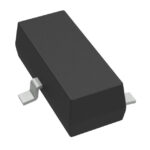 TL4050A25QDBZR
The activity of extra discounts on wholesale prices is in full swing…
Please fill in your contact information and we will send you the latest wholesale price list.







