 ChipApex | Global Electronic Components Supplier
SEARCH
Search Product
Search Post
— IC芯片 | 连接器 | 传感器 | 被动器件 —
Search productSearch post
— IC芯片 | 连接器 | 传感器 | 被动器件 —
Consult the customer manager about the wholesale price.
consultation hotline:86-132-6715-2157
email:[email protected]
Contact the product manager for consultation. One-stop consultation is available.
Do you want a lower wholesale price? Please send us your inquiry and we will reply immediately.
The TL431ACLPRP is a three-terminal programmable shunt regulator diode from the TL431, A, B series manufactured by onsemi. It operates as a low temperature coefficient Zener reference programmable from Vref to 36 V using two external resistors. The device features a wide operating current range of 1.0 mA to 100 mA with a typical dynamic impedance of 0.22 Ω. It provides a stable 2.5 V reference input and functions as either a positive or negative voltage reference. The component is housed in a TO-92 (TO-226) package with an LP suffix and supports an operating ambient temperature range of 0°C to +70°C.
Verify the specific ordering suffix matches the required tolerance and packaging format. Confirm the operating temperature range aligns with system thermal constraints. Ensure compatibility with RoHS compliance standards if applicable. Cross-reference the datasheet revision to validate electrical characteristics against design requirements.
Select this component when a programmable shunt regulator is needed within the 0°C to +70°C commercial temperature range. Consider the TO-92 package for through-hole mounting applications. Evaluate the 1.0% voltage reference tolerance against circuit accuracy requirements. Assess stability boundary conditions regarding load capacitance and cathode current before implementation.
This part belongs to the TL431, A, B series of programmable precision references. It serves as a direct replacement for standard Zener diodes in many analog and digital applications. The series includes variants with different tolerances and extended temperature ranges, such as the NCV prefix for automotive applications. The device integrates internal compensation for stable operation across its specified current range.
Compatible substitutes include other TL431 series variants like TL431ACLP or TL431AILP depending on temperature and tolerance needs. Verify pinout compatibility and package dimensions when substituting. Check datasheet specifications for dynamic impedance and reference voltage deviation to ensure equivalent performance.
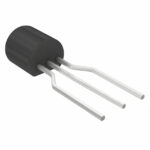 TL431ACLPRP
The activity of extra discounts on wholesale prices is in full swing…
Please fill in your contact information and we will send you the latest wholesale price list.






