 ChipApex | Global Electronic Components Supplier
SEARCH
Search Product
Search Post
— IC芯片 | 连接器 | 传感器 | 被动器件 —
Search productSearch post
— IC芯片 | 连接器 | 传感器 | 被动器件 —
Consult the customer manager about the wholesale price.
consultation hotline:86-132-6715-2157
email:[email protected]
Contact the product manager for consultation. One-stop consultation is available.
Do you want a lower wholesale price? Please send us your inquiry and we will reply immediately.
The TL431AIPG4 is a three-terminal adjustable shunt regulator from the Texas Instruments TL431 series. It operates with an input voltage range of 2.5V to 36V and provides an initial accuracy of ±1%. The device supports a maximum cathode current of 100mA and features a temperature coefficient of 92 ppm/°C. Designed for through-hole mounting, it utilizes an 8-pin PDIP package (0.300 inch width). The component functions within a temperature range of -40°C to 85°C and serves as a precision reference in switching power supplies.
Verify the specific suffix 'PG4' indicates lead-free construction and RoHS compliance per Texas Instruments documentation. Confirm the package type matches the required 8-pin DIP footprint for your PCB layout. Ensure the operating temperature range of -40°C to 85°C meets your environmental specifications. Cross-reference the datasheet for any recent product change notices affecting this specific revision.
Select the TL431AIPG4 when high accuracy is required compared to standard ±2% variants. The PDIP package is suitable for prototyping or applications requiring through-hole assembly. Consider the 100mA current limit for load requirements. Verify that the 36V maximum input voltage aligns with your circuit's supply rails. This component is ideal for replacing Zener diodes where sharper turn-on characteristics are needed.
This component belongs to the industry-standard TL431 family of programmable references. It shares functional similarities with the TLA431 but lacks the latter's all-capacitor stability feature. The TL431 series is widely used in power management for its reliability and cost-effectiveness. The 'A' grade denotes the tighter ±1% tolerance band available in this specific part number.
The TL431IDBZR is listed as a manufacturer-recommended alternative for surface-mount applications. For pin-compatible replacements, verify if the TLA431 series meets stability requirements for capacitive loads. Standard TL431 variants with different accuracy grades may serve as substitutes if tolerance requirements allow.
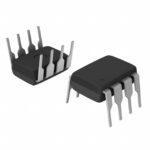 TL431AIPG4
The activity of extra discounts on wholesale prices is in full swing…
Please fill in your contact information and we will send you the latest wholesale price list.






