 ChipApex | Global Electronic Components Supplier
SEARCH
Search Product
Search Post
— IC芯片 | 连接器 | 传感器 | 被动器件 —
Search productSearch post
— IC芯片 | 连接器 | 传感器 | 被动器件 —
Consult the customer manager about the wholesale price.
consultation hotline:86-132-6715-2157
email:[email protected]
Contact the product manager for consultation. One-stop consultation is available.
Do you want a lower wholesale price? Please send us your inquiry and we will reply immediately.
The TL431AIZT is an adjustable shunt voltage reference manufactured by STMicroelectronics, housed in a TO-92-3 through-hole package. It provides an adjustable output voltage ranging from 2.495 V to 36 V, set via two external resistors. The device features a typical dynamic impedance of 0.22 Ω and operates with a cathode current range of 1 mA to 100 mA. It offers initial accuracy options including ±1% and ±2%, with a temperature coefficient of 100 ppm/°C. The component supports an operating temperature range from -40 °C to +105 °C and complies with RoHS3 standards.
Verify the specific tolerance grade (e.g., A for 1% or standard) required for your design, as the base part number may encompass multiple precision variants. Confirm the package type matches the TO-92-3 form factor. Ensure the supplier documentation explicitly states compliance with RoHS3 directives. Check that the operating temperature range meets the environmental requirements of the target application, specifically the -40 °C to +105 °C limit.
Select this component when a low-cost, high-precision shunt reference is needed for general-purpose applications. The TO-92-3 package is suitable for prototyping and low-volume production where surface mount space is not critical. Consider the 100 ppm/°C temperature coefficient for thermal stability requirements. Compare against the TS431 if lower voltage operation below 2.5 V is required, or the TL432 if a four-terminal configuration is preferred.
The TL431 series is a widely used family of programmable shunt voltage references known for their versatility and cost-effectiveness. The TL431AIZT represents the through-hole variant of this family, offering robust performance for industrial and consumer electronics. It serves as a direct replacement for legacy Zener diodes in many regulation scenarios, providing superior accuracy and temperature stability compared to simple diode-based references.
Publicly confirmed substitute part numbers include TL1431CLPR and TL431ACLPR from Texas Instruments. These alternatives offer similar electrical characteristics and pin compatibility. Verify that the substitute's tolerance grade and temperature coefficient align with the original design specifications before implementation.
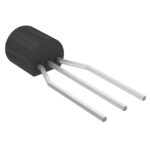 TL431AIZT
The activity of extra discounts on wholesale prices is in full swing…
Please fill in your contact information and we will send you the latest wholesale price list.







