 ChipApex | Global Electronic Components Supplier
SEARCH
Search Product
Search Post
— IC芯片 | 连接器 | 传感器 | 被动器件 —
Search productSearch post
— IC芯片 | 连接器 | 传感器 | 被动器件 —
Consult the customer manager about the wholesale price.
consultation hotline:86-132-6715-2157
email:[email protected]
Contact the product manager for consultation. One-stop consultation is available.
Do you want a lower wholesale price? Please send us your inquiry and we will reply immediately.
The TL431CDRG4 is an adjustable precision shunt regulator manufactured by Texas Instruments, belonging to the TL431 series. It operates within a supply voltage range of up to 36 V and provides an adjustable output voltage from 2.495 V to 36 V. The device features an initial accuracy of ±2.2% and a temperature coefficient of 92 PPM/°C. It supports a maximum cathode current of 100 mA and functions reliably across an operating temperature range of 0°C to +70°C. Packaged in an 8-SOIC surface-mount format, it serves as a high-performance voltage reference.
Verify component authenticity through authorized distributors or direct manufacturer channels. Confirm RoHS compliance status and specific package marking codes match the datasheet specifications. Ensure storage conditions adhere to moisture sensitivity level requirements to prevent package damage prior to soldering. Cross-reference ordering information with official Texas Instruments documentation to avoid counterfeit risks.
Select this component when a cost-effective, adjustable shunt regulator with ±2.2% accuracy is required. Consider the 8-SOIC package for standard surface-mount assembly processes. Evaluate thermal performance within the 0°C to +70°C operational range against system constraints. Compare against higher-accuracy variants if tighter tolerance specifications are necessary for the application.
This part belongs to the widely adopted TL431 family of adjustable shunt regulators, known for replacing Zener diodes in many applications. It integrates a bandgap reference, error amplifier, and output transistor on a single monolithic IC. The 'G4' suffix indicates lead-free packaging compliant with environmental standards, aligning with modern manufacturing requirements for electronic components.
Direct substitutes include TL431CDR and TL431ACDR, which share identical pinouts and electrical characteristics but may differ in accuracy grades or packaging suffixes. Verify that replacement parts maintain the same SOIC-8 footprint and operational voltage limits to ensure seamless integration without circuit redesign.
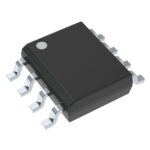 TL431CDRG4
The activity of extra discounts on wholesale prices is in full swing…
Please fill in your contact information and we will send you the latest wholesale price list.






