 ChipApex | Global Electronic Components Supplier
SEARCH
Search Product
Search Post
— IC芯片 | 连接器 | 传感器 | 被动器件 —
Search productSearch post
— IC芯片 | 连接器 | 传感器 | 被动器件 —
Consult the customer manager about the wholesale price.
consultation hotline:86-132-6715-2157
email:[email protected]
Contact the product manager for consultation. One-stop consultation is available.
Do you want a lower wholesale price? Please send us your inquiry and we will reply immediately.
The TL431QDBVRE4 is an automotive-grade adjustable precision shunt regulator manufactured by Texas Instruments. It operates within a reference voltage range of 2.495 V to 36 V and supports a maximum cathode current of 100 mA. The device features a temperature coefficient of 92 ppm/°C and maintains operation across an extended industrial temperature range from -40°C to +125°C. Packaged in a compact SOT-23-5 surface-mount format, it ensures stable performance for power management applications requiring high accuracy and reliability under varying thermal conditions.
Verify the complete part number including the E4 suffix to confirm lead-free composition and specific manufacturing lot details. Confirm automotive grade status through official Texas Instruments documentation prior to integration. Ensure compatibility with RoHS directives and check for any recent product change notices affecting pinout or electrical specifications. Validate supplier authorization to guarantee component authenticity and traceability.
Select this component when automotive reliability and wide operating temperature ranges are required. The SOT-23-5 package suits space-constrained designs needing precise shunt regulation. Consider the 100 mA current limit for load requirements. Verify that the 92 ppm/°C temperature coefficient meets circuit stability needs. Compare against standard commercial grades if automotive certification is not mandatory for the application.
This device belongs to the TL431 family of programmable shunt regulators, widely used for voltage referencing and control. The Q prefix denotes automotive qualification, while DBVR indicates the SOT-23-5 tape-and-reel packaging. The E4 suffix specifies lead-free construction. This variant integrates the core TL431 functionality with enhanced durability specifications suitable for harsh automotive environments.
TL431QDBVR is the non-lead-free equivalent with identical electrical characteristics and pinout. TL431AQDBVRQ1G4 offers similar automotive qualification with potentially different initial accuracy grades. Verify pin compatibility and thermal performance before substitution.
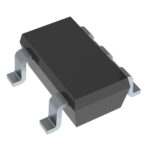 TL431QDBVRE4
The activity of extra discounts on wholesale prices is in full swing…
Please fill in your contact information and we will send you the latest wholesale price list.






