 ChipApex | Global Electronic Components Supplier
SEARCH
Search Product
Search Post
— IC芯片 | 连接器 | 传感器 | 被动器件 —
Search productSearch post
— IC芯片 | 连接器 | 传感器 | 被动器件 —
Consult the customer manager about the wholesale price.
consultation hotline:86-132-6715-2157
email:[email protected]
Contact the product manager for consultation. One-stop consultation is available.
Do you want a lower wholesale price? Please send us your inquiry and we will reply immediately.
The TLC04ID is a monolithic Butterworth fourth-order low-pass switched-capacitor filter manufactured by Texas Instruments. It operates within an industrial temperature range of -40°C to +85°C and utilizes an 8-pin SOIC package. The device provides accurate filtering functions where the cutoff frequency is determined solely by the external clock frequency stability, featuring a clock-to-cutoff ratio of 50:1 with less than ±0.8% error. Recommended operating conditions specify supply voltages between ±2.25 V and ±6 V. Electrical characteristics at ±5 V indicate a typical supply current of 3 mA, a dynamic range of 86 dB, and a maximum clock frequency of 2 MHz.
Verify the exact ordering suffix against the manufacturer's latest documentation before procurement. Confirm that the specified package variant matches the required PCB footprint and thermal dissipation capabilities. Ensure the component status remains active for long-term production viability. Cross-reference the lead finish specifications to guarantee compatibility with intended soldering processes and environmental compliance standards.
Select this component when a fixed Butterworth response is required without external passive components. Evaluate the available clock frequencies to ensure they align with the desired cutoff range. Consider the single-supply versus dual-supply configuration requirements based on the application's ground reference needs. Verify that the input signal levels remain within the recommended operating voltage limits.
This part belongs to the TLC04/MF4A-50 family of switched-capacitor filters. It serves as a direct replacement for older discrete RC filter designs in space-constrained applications. The device integrates the necessary operational amplifiers and switching capacitors onto a single silicon die, reducing board area and improving consistency compared to discrete implementations.
TLC04CD
The cutoff frequency is defined by the external clock frequency applied to the CLKIN or CLKR terminals, maintaining a fixed ratio of 50:1.
The device supports self-clocking configurations using external resistors and capacitors, as well as TTL-compatible and CMOS-compatible external clock signals.
Yes, the device can operate on a single supply, provided that the AGND terminal is biased to midsupply and the filter input signal is appropriately AC-coupled or DC-biased.
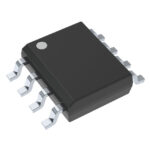 TLC04ID
The activity of extra discounts on wholesale prices is in full swing…
Please fill in your contact information and we will send you the latest wholesale price list.





