 ChipApex | Global Electronic Components Supplier
SEARCH
Search Product
Search Post
— IC芯片 | 连接器 | 传感器 | 被动器件 —
Search productSearch post
— IC芯片 | 连接器 | 传感器 | 被动器件 —
Consult the customer manager about the wholesale price.
consultation hotline:86-132-6715-2157
email:[email protected]
Contact the product manager for consultation. One-stop consultation is available.
Do you want a lower wholesale price? Please send us your inquiry and we will reply immediately.
The TLC14IDG4 is a monolithic Butterworth fourth-order low-pass switched-capacitor filter manufactured by Texas Instruments. It operates within a supply voltage range of ±2.25 V to ±6 V and supports an operating temperature range from -40 °C to 85 °C. The device provides a cutoff frequency tunable via an external clock, with a standard clock-to-cutoff ratio of 100:1 and less than ±1% error. Key electrical parameters include a maximum clock frequency of 4 MHz at ±5 V supplies, a typical dynamic range of 84 dB, and a supply current of 3 mA at 250 kHz clocking. It features self-clocking or TTL/CMOS-compatible clock inputs.
Verify the specific ordering suffix against the manufacturer's latest package option addendum to confirm the exact tube quantity and lead finish specifications. Ensure that the selected variant matches the required industrial temperature range and RoHS compliance status for your manufacturing process.
Select this component when a fixed fourth-order Butterworth response is required without discrete passive components. The cutoff frequency must be derived from an external clock signal; ensure the clock source meets the specified duty cycle requirements above 250 kHz to allow operational amplifier settling time.
This part belongs to the TLC04/MF4A family of switched-capacitor filters. It is designed as a direct replacement for National Semiconductor MF4-100 devices. The 'ID' designation indicates the industrial temperature grade (-40 °C to 85 °C), while the 'G4' suffix denotes the specific lead-free packaging configuration.
TLC04IDG4 (50:1 clock-to-cutoff ratio)
The cutoff frequency is determined exclusively by the frequency of the external clock signal applied to the CLKIN or CLKR terminals.
The device supports self-clocking via an external RC network, TTL-compatible clocks using the CLKR terminal, and CMOS-compatible clocks using the CLKIN terminal.
The maximum clock frequency is 4 MHz when operating with ±5 V supplies, provided the duty cycle is maintained at 50% for frequencies above 250 kHz.
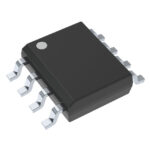 TLC14IDG4
The activity of extra discounts on wholesale prices is in full swing…
Please fill in your contact information and we will send you the latest wholesale price list.





