 ChipApex | Global Electronic Components Supplier
SEARCH
Search Product
Search Post
— IC芯片 | 连接器 | 传感器 | 被动器件 —
Search productSearch post
— IC芯片 | 连接器 | 传感器 | 被动器件 —
Consult the customer manager about the wholesale price.
consultation hotline:86-132-6715-2157
email:[email protected]
Contact the product manager for consultation. One-stop consultation is available.
Do you want a lower wholesale price? Please send us your inquiry and we will reply immediately.
The TLC5926QPWPRQ1 is an automotive-grade, 16-channel constant-current LED sink driver manufactured by Texas Instruments. It operates within a supply voltage range of 3 V to 5.5 V and supports PWM dimming frequencies up to 30 MHz. The device delivers a maximum output current of 60 mA per channel with high accuracy. It features thermal shutdown protection and is housed in a 28-pin HTSSOP package. Certified under AEC-Q100 standards, it ensures reliability for demanding automotive environments.
Verify the specific suffix 'QPWPRQ1' matches your design requirements, as it denotes the automotive grade, HTSSOP-28 package, and tape-and-reel packaging configuration. Confirm that the AEC-Q100 qualification aligns with your vehicle's component certification standards. Ensure input voltage levels remain within the specified 3 V to 5.5 V range during operation to maintain proper functionality and avoid damage to the internal circuitry.
Select this component when designing automotive lighting circuits requiring multiple synchronized LED outputs without external microcontroller complexity. It is suitable for applications needing uniform current distribution across numerous LEDs. Consider the thermal performance and package size constraints when integrating into dense PCB layouts. Verify compatibility with existing PWM control signals from the host processor before finalizing the design.
This part belongs to the TLC592x family of constant-current LED sink drivers, specifically tailored for automotive use. It shares functional similarities with other members like the TLC5926 but includes additional robustness features required for automotive electronics. The Q1 suffix indicates compliance with strict automotive quality and reliability standards set by the Automotive Electronics Council.
Direct substitutes include the standard commercial version TLC5926PWPR or the non-Q1 automotive variant TLC5926QPWPR. When replacing, verify that the pinout remains identical and that the operating temperature range meets the new application's environmental demands. Ensure that any alternative maintains the same 16-channel architecture and current sourcing capabilities.
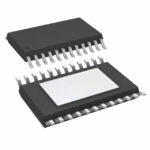 TLC5926QPWPRQ1
The activity of extra discounts on wholesale prices is in full swing…
Please fill in your contact information and we will send you the latest wholesale price list.





