 ChipApex | Global Electronic Components Supplier
SEARCH
Search Product
Search Post
— IC芯片 | 连接器 | 传感器 | 被动器件 —
Search productSearch post
— IC芯片 | 连接器 | 传感器 | 被动器件 —
Consult the customer manager about the wholesale price.
consultation hotline:86-132-6715-2157
email:[email protected]
Contact the product manager for consultation. One-stop consultation is available.
Do you want a lower wholesale price? Please send us your inquiry and we will reply immediately.
The TLC69608YBHR is an LED lighting driver IC designed for 128 mini-LED matrix local dimming backlight applications. It features 16 channels with integrated current sinks, supporting PWM dimming at up to 30mA per channel. The device operates on a supply voltage range of 3V to 5.5V and supports a maximum output voltage of 20V. It utilizes a 24-pin DSBGA package (1.58x2.43mm) and functions within a temperature range of -40°C to +85°C. The component integrates time-multiplexing capabilities for efficient matrix driving.
Verify the specific suffix YBHR corresponds to the required 24-pin DSBGA package configuration. Confirm that the operating temperature range of -40°C to +85°C meets the target application's environmental requirements. Ensure compatibility with the host controller's interface protocols for data transmission and synchronization signals before finalizing procurement decisions.
Select this component when designing systems requiring independent control over multiple LED zones in a compact footprint. The integrated current sinks reduce external component count compared to discrete solutions. Consider the 20V output limit and 30mA per channel capability when sizing the LED array. Verify power dissipation constraints within the small DSBGA package for thermal management strategies.
This part belongs to the Texas Instruments TLC6960x series of LED drivers. The series includes variants like TLC69602, TLC69604, and TLC69608, differing primarily in channel counts and multiplexing configurations. These devices are engineered specifically for advanced backlighting applications where local dimming improves image quality and energy efficiency in modern display technologies.
Direct substitutes include other members of the TLC6960x family such as TLC69602 or TLC69604 if channel count adjustments are acceptable. Cross-reference pinout compatibility and electrical specifications carefully. No alternative part numbers are explicitly confirmed as direct replacements in public documentation without functional verification.
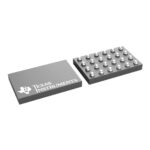 TLC69608YBHR
The activity of extra discounts on wholesale prices is in full swing…
Please fill in your contact information and we will send you the latest wholesale price list.





