 ChipApex | Global Electronic Components Supplier
SEARCH
Search Product
Search Post
— IC芯片 | 连接器 | 传感器 | 被动器件 —
Search productSearch post
— IC芯片 | 连接器 | 传感器 | 被动器件 —
Consult the customer manager about the wholesale price.
consultation hotline:86-132-6715-2157
email:[email protected]
Contact the product manager for consultation. One-stop consultation is available.
Do you want a lower wholesale price? Please send us your inquiry and we will reply immediately.
The TLC6C5912QDWRQ1 is a monolithic, medium-voltage, low-current power 12-bit shift register designed for automotive LED lighting applications. It features twelve Power DMOS transistor outputs capable of delivering 50 mA continuous current at VCC = 5V. The device operates with a wide VCC range from 3 V to 5.5 V and supports an output maximum rating of 40 V. It utilizes a boost topology and functions at a working frequency of 10 MHz. Packaged in a 20-SOIC format, it meets AEC-Q100 qualification standards and operates within a temperature range of -40°C to +125°C.
Verify the complete part number including suffixes such as 'Q' for automotive qualification and 'DWR' for the SOIC-20 tape-and-reel package. Confirm that the specific revision matches the design requirements. Ensure compliance with RoHS directives and check moisture sensitivity levels prior to assembly. Cross-reference the manufacturer datasheet for any recent product change notifications or lifecycle status updates before finalizing procurement orders.
Select this component when a 12-channel solution is required for moderate-load automotive LED applications. The 50 mA per channel output current suits standard indicator and illumination LEDs. The 40 V output voltage rating allows flexibility in series LED string configurations. Consider the 20-SOIC package for surface-mount assembly constraints. Verify that the 3 V to 5.5 V supply range aligns with the vehicle's electrical architecture.
This device belongs to the TLC6C5912-Q1 family of Power Logic shift register drivers. It is engineered specifically for automotive environments requiring robust performance under varying thermal conditions. The integration of power transistors reduces external component count compared to discrete solutions. It serves as a key interface between microcontrollers and LED arrays in modern vehicle lighting architectures.
The TLC6C5912QPWRQ1 is a documented alternative offering the same functional specifications in a PW (TSSOP) package. Verify pin compatibility and thermal characteristics when substituting packages. No other cross-model replacements are confirmed in public documentation.
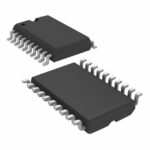 TLC6C5912QDWRQ1
The activity of extra discounts on wholesale prices is in full swing…
Please fill in your contact information and we will send you the latest wholesale price list.





