 ChipApex | Global Electronic Components Supplier
SEARCH
Search Product
Search Post
— IC芯片 | 连接器 | 传感器 | 被动器件 —
Search productSearch post
— IC芯片 | 连接器 | 传感器 | 被动器件 —
Consult the customer manager about the wholesale price.
consultation hotline:86-132-6715-2157
email:[email protected]
Contact the product manager for consultation. One-stop consultation is available.
Do you want a lower wholesale price? Please send us your inquiry and we will reply immediately.
The TLE2425MDR is a precision virtual ground reference IC from Texas Instruments, designed for single-supply analog systems. It integrates a micropower voltage reference and a high-performance operational amplifier into a single silicon chip. The device provides a fixed 2.5 V output with an input voltage range of 4 V to 40 V. It operates within an extended temperature range of -55°C to 125°C. Key electrical characteristics include a typical bias current of 170 µA, an output impedance of 7.5 mΩ, and a short-circuit current capability of ±50 mA. The component is housed in an 8-pin Small Outline (D) package.
Verify the specific suffix 'MDR' corresponds to the industrial/extended temperature grade (-55°C to 125°C) and the SOIC-8 tape-and-reel packaging configuration. Confirm that the 'M' suffix denotes the extended temperature range and 'DR' indicates the reel packaging as per the manufacturer's ordering information. Ensure compatibility with the intended operating environment and assembly process requirements.
Select this component when designing single-supply analog circuits that require a robust, low-impedance virtual ground without the complexity of discrete op-amp and reference combinations. The M-suffix variant is appropriate for applications operating in extreme cold or high-temperature environments. Consider the 4 V to 40 V input voltage range and the 2.5 V output level when defining system power rails and signal swing requirements.
The TLE2425 series serves as a dedicated solution for creating precision virtual grounds in analog signal paths. Unlike general-purpose voltage references, this device combines regulation with buffering to drive loads directly. The MD variant specifically addresses reliability needs in harsh thermal environments, distinguishing it from commercial (C) and industrial (I) temperature grades within the same product family.
TLE2425MD
Pins 4, 5, 6, and 7 are internally unconnected (NC). They do not affect device operation but should be handled according to standard PCB layout practices for unused pins.
It eliminates the high output impedance and noise associated with passive resistor networks by integrating a precision reference and a low-impedance buffer, thereby improving signal-to-noise ratio and reducing distortion in data acquisition systems.
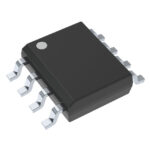 TLE2425MDR
The activity of extra discounts on wholesale prices is in full swing…
Please fill in your contact information and we will send you the latest wholesale price list.







