 ChipApex | Global Electronic Components Supplier
SEARCH
Search Product
Search Post
— IC芯片 | 连接器 | 传感器 | 被动器件 —
Search productSearch post
— IC芯片 | 连接器 | 传感器 | 被动器件 —
Consult the customer manager about the wholesale price.
consultation hotline:86-132-6715-2157
email:[email protected]
Contact the product manager for consultation. One-stop consultation is available.
Do you want a lower wholesale price? Please send us your inquiry and we will reply immediately.
The TLE8261EXUMA3 is a universal System Basis Chip (SBC) from Infineon's HERMES family, designed for automotive CAN-LIN applications such as body controllers and gateways. It integrates a high-speed CAN transceiver compliant with ISO 11898-2/5 and SAE J2284, supporting data rates up to 1 MBaud. The device provides three low-dropout voltage regulators: Vcc1µC (200 mA, 5 V), Vcc2 (200 mA, 5 V), and Vcc3 (up to 400 mA). Key features include a 16-bit SPI interface, configurable watchdog timers, interrupt management, and a Limp Home fail-safe output. It operates in multiple power modes including Sleep, Stop, and Normal, with bi-level wake-up capabilities.
Verify the specific ordering suffix EXUMA3 against the manufacturer's current datasheet to confirm package type and tape/reel specifications. Ensure compatibility with the target PCB footprint for the PG-DSO-36-38 package. Confirm that the application design accounts for the exposed die pad thermal requirements and electrical isolation options.
Select this component when a single-chip solution for CAN communication and power regulation is required without LIN integration. Compare with TLE8262E if one LIN channel is needed, or TLE8263E/TLE8264E for two or three LIN channels respectively. Ensure the external PNP transistor configuration for Vcc3 meets the current demands of the application.
The TLE8261E belongs to the scalable HERMES SBC family, which shares identical software functionality and hardware features across variants. The primary distinction within the family is the number of integrated LIN cells; the TLE8261E specifically lacks LIN transceivers, offering only HS-CAN capability. This makes it suitable for cost-sensitive or simplified network architectures where LIN is not required.
Direct replacements within the same family include TLE8262E (1 LIN), TLE8263E (2 LIN), and TLE8264E (3 LIN). These parts are hardware and software compatible but offer additional LIN interfaces. Verify pin compatibility and ensure the extra LIN pins are handled correctly in the PCB layout if substituting with a higher-integration variant.
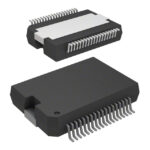 TLE8261EXUMA3
The activity of extra discounts on wholesale prices is in full swing…
Please fill in your contact information and we will send you the latest wholesale price list.






