 ChipApex | Global Electronic Components Supplier
SEARCH
Search Product
Search Post
— IC芯片 | 连接器 | 传感器 | 被动器件 —
Search productSearch post
— IC芯片 | 连接器 | 传感器 | 被动器件 —
Consult the customer manager about the wholesale price.
consultation hotline:86-132-6715-2157
email:[email protected]
Contact the product manager for consultation. One-stop consultation is available.
Do you want a lower wholesale price? Please send us your inquiry and we will reply immediately.
The TLE9877QXA40XUMA4 is an automotive-grade system-on-chip (SoC) from Infineon's MOTIX™ family, integrating a 32-bit ARM® Cortex®-M3 core with a three-phase bridge driver. It features 64 kB of flash memory and 6 kB of RAM, operating at a maximum clock frequency of 40 MHz. The device supports a supply voltage range of 5.5 V to 28 V and includes a LIN transceiver for communication. Designed for sensorless field-oriented control (FOC), it utilizes external NFETs driven by integrated gate drivers with charge pump functionality. The component is housed in a 48-pin VQFN package and operates within a temperature range of -40 °C to +150 °C.
Verify the specific ordering suffix XUMA4 against the manufacturer's official documentation to confirm packaging details and tape-and-reel specifications. Ensure compatibility with automotive qualification standards such as AEC-Q100 during the design-in phase. Cross-reference the part number with the latest datasheet revision to confirm availability status and any potential errata updates.
Select this SoC for applications requiring integrated motor control and LIN communication without external microcontrollers. Compare pinout and peripheral sets with other TLE987x variants if different memory sizes or interface options are required. Verify that the external NFET selection matches the driver capabilities and voltage ratings specified in the application guidelines.
This component belongs to the TLE987x product family, which provides scalable motor control solutions. It shares architectural similarities with parts like the TLE9877QXA40XUMA2 but may differ in packaging or specific manufacturing lot attributes defined by the suffix. The MOTIX™ ecosystem offers associated software libraries and reference designs to accelerate development for automotive motor applications.
The TLE9877QXA40XUMA2 is a verified alternative within the same functional family. Confirm pin-to-pin compatibility and identical electrical characteristics before substitution. Review the specific datasheet differences between the XUMA2 and XUMA4 suffixes to ensure no changes in packaging or quality classification affect the design.
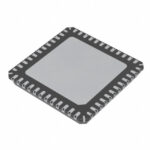 TLE9877QXA40XUMA4
The activity of extra discounts on wholesale prices is in full swing…
Please fill in your contact information and we will send you the latest wholesale price list.






