 ChipApex | Global Electronic Components Supplier
SEARCH
Search Product
Search Post
— IC芯片 | 连接器 | 传感器 | 被动器件 —
Search productSearch post
— IC芯片 | 连接器 | 传感器 | 被动器件 —
Consult the customer manager about the wholesale price.
consultation hotline:86-132-6715-2157
email:[email protected]
Contact the product manager for consultation. One-stop consultation is available.
Do you want a lower wholesale price? Please send us your inquiry and we will reply immediately.
The Infineon TLE9883QTA62XUMA1 is a MOTIX™ microcontroller designed for BLDC motor control applications. It integrates a 32-bit Arm Cortex-M3 core operating at up to 60 MHz with 256 KB of FLASH1 and 32 KB of RAM. The device features an integrated CAN-FD protocol handler and transceiver, alongside a 3-phase bridge driver with charge pump and PWM generation via CCU7. It includes a low-side shunt current sense amplifier, three BEMF comparators, and multiple ADCs including a 14-bit SDADC for rotary sensors. Qualified for automotive use under AEC-Q100, it supports a supply voltage range of 5.5 V to 28 V and operates within a junction temperature range of -40°C to 175°C.
Verify the specific ordering suffix XUMA1 corresponds to the reel packaging format as indicated by distributor data. Confirm that the ASIL-B safety classification aligns with the system requirements, noting that the device functions as a Safety Element out of Context. Ensure compatibility with the required package type, typically TQFP-48 or LQFP-64, during component sourcing.
Select this model when a single-chip solution for BLDC motors is required, combining MCU logic with power stage drivers. The presence of CAN-FD makes it suitable for networked automotive environments. Consider the 14-bit SDADC if precise rotary position sensing is needed. Verify that the 256 KB FLASH capacity meets the firmware size requirements for complex control algorithms.
This component belongs to the Infineon MOTIX™ TLE988x/TLE989x family of microcontrollers. These devices are specifically engineered for brushed DC and BLDC motor control in automotive applications. The TLE9883 variant distinguishes itself with CAN-FD capabilities and higher memory configurations compared to earlier generations, supporting advanced security features like secured boot and layered access rights management.
Direct replacements within the same family include other TLE988x variants with differing memory sizes or pin counts. Cross-family substitution with TLE989x models requires verification of the bridge driver configuration and GPIO mapping. Always consult the latest errata sheet for any known silicon revisions affecting performance.
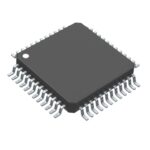 TLE9883QTA62XUMA1
The activity of extra discounts on wholesale prices is in full swing…
Please fill in your contact information and we will send you the latest wholesale price list.





