ChipApex | Global Electronic Components Supplier
SEARCH
Search Product
Search Post
— IC芯片 | 连接器 | 传感器 | 被动器件 —
Search productSearch post
— IC芯片 | 连接器 | 传感器 | 被动器件 —
Consult the customer manager about the wholesale price.
consultation hotline:86-132-6715-2157
email:[email protected]
Contact the product manager for consultation. One-stop consultation is available.
Do you want a lower wholesale price? Please send us your inquiry and we will reply immediately.
The TLK1501IRCPG4 is a high-performance Ethernet transceiver manufactured by Texas Instruments. It supports data rates ranging from 600 Mb/s to 1.3 Gb/s, facilitating serial interface connectivity for network applications. The device operates within a supply voltage range of 2.3 V to 2.7 V and functions reliably across an industrial temperature spectrum from -40°C to +85°C. Packaged in a 64-pin HVQFP (High-Volume Quad Flat Package) with surface-mount technology, it integrates a single transceiver channel designed for robust signal integrity in demanding communication environments.
Verify the specific suffix G4 indicates lead-free compliance and RoHS status against current manufacturer documentation. Confirm package dimensions and pinout compatibility during integration planning. Ensure thermal management strategies align with the specified operating temperature limits. Cross-reference ordering information with official Texas Instruments catalogs to validate availability and revision levels before procurement.
Select this component when designing systems requiring a single-channel Ethernet transceiver with support for speeds up to 1.3 Gbps. Consider the HVQFP-64 package constraints regarding PCB space and thermal dissipation capabilities. Evaluate power supply requirements to ensure stable operation within the 2.3V to 2.7V range. Assess environmental conditions to confirm suitability for the -40°C to +85°C operational window required by the application.
The TLK1501 belongs to the TLK1501 series of Ethernet transceivers from Texas Instruments. This series is engineered for high-speed serial communication interfaces. The IRCPG4 designation specifies the tape-and-reel or tray packaging variant with green/RoHS-compliant materials. It serves as a critical interface component bridging digital logic levels to physical layer signals in modern networking hardware.
Consult Texas Instruments documentation for direct pin-to-pin replacements or functional equivalents within the TLK1501 family. Verify that any substitute maintains identical voltage, speed, and package specifications. Review application notes for interfacing considerations when transitioning between similar transceiver models.
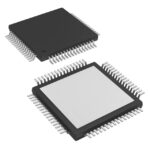 TLK1501IRCPG4
The activity of extra discounts on wholesale prices is in full swing…
Please fill in your contact information and we will send you the latest wholesale price list.