ChipApex | Global Electronic Components Supplier

SEARCH
Search Product
Search Post
Search productSearch post
Consult the customer manager about the wholesale price.
consultation hotline:86-132-6715-2157
email:[email protected]
Contact the product manager for consultation. One-stop consultation is available.
Do you want a lower wholesale price? Please send us your inquiry and we will reply immediately.
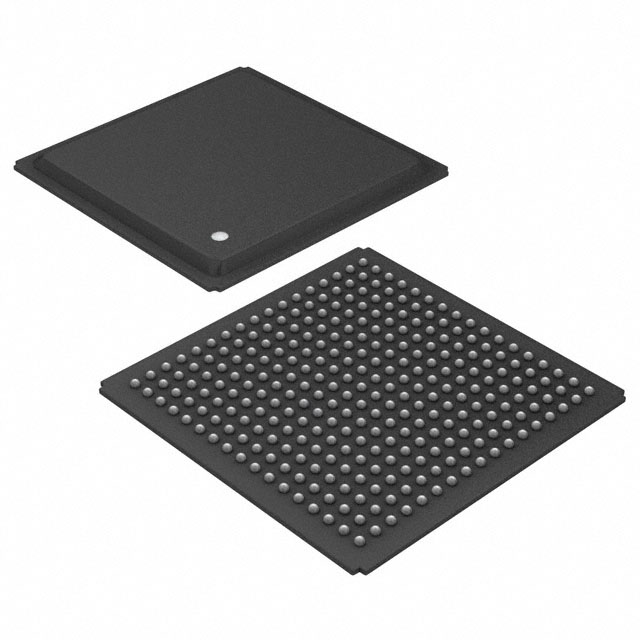
TLK2208AZPV is listed in the Drivers, Receivers, Transceivers range at ChipApex. The manufacturer field lists Texas Instruments. Its product description is IC TRANSCEIVER FULL 8/8 289BGA. Review the specifications below when checking this part for your BOM.
The TLK2208AZPV is a third-generation Gigabit Ethernet transceiver from Texas Instruments, designed for high-speed full-duplex point-to-point data transmission. It supports IEEE 802.3z specifications with data rates ranging from 1.0 Gbps to 1.3 Gbps across eight independent channels. The device integrates an 8b/10b encoder and decoder, clock tolerance compensation, and serial loopback capabilities. It operates on a single 1.8-V supply (extendable to 2.5 V) and consumes less than 1.3 W at 1.25 Gbps. Packaged in a 289-terminal, 19×19-mm BGA with a 1.0-mm ball pitch, it features hot-plug protection and JEDEC-compliant LVCMOS I/O.
Verify the specific suffix 'A' against the manufacturer's official documentation to confirm any functional differences or revisions compared to the standard TLK2208 model. Ensure that the 289-ball BGA footprint matches the target PCB design constraints. Confirm that the commercial temperature rating of 0°C to 70°C aligns with the operational environment requirements of the final application.
Select this component when designing systems requiring eight synchronized Gigabit Ethernet channels within a compact form factor. It is suitable for applications needing integrated 8b/10b encoding and decoding to reduce protocol processor load. Consider its compatibility with PMC-Sierra PM8352 footprints if migrating existing designs. Evaluate the 1.8-V supply requirement and ensure the system architecture supports the specified JEDEC-compliant LVCMOS voltage levels.
The TLK2208A represents the third generation of Texas Instruments' Gigabit Ethernet transceivers, succeeding earlier models like the TLK2201. It offers higher port density by integrating eight channels into a single package while maintaining ultralow power consumption. This evolution allows for more compact network interface designs compared to previous generations that typically offered fewer channels per package.
The TLK2208A is functionally compatible with the PMC-Sierra PM8352 in multiplex channel mode regarding ball out and footprint. Designers should verify signal integrity and timing parameters when substituting between these devices to ensure proper operation in synchronous modes.
Explore related parts through Interface, Integrated Circuits (ICs), all product categories, ChipApex homepage.
 TLK2208AZPV

The activity of extra discounts on wholesale prices is in full swing…
Please fill in your contact information and we will send you the latest wholesale price list.