 ChipApex | Global Electronic Components Supplier
SEARCH
Search Product
Search Post
— IC芯片 | 连接器 | 传感器 | 被动器件 —
Search productSearch post
— IC芯片 | 连接器 | 传感器 | 被动器件 —
Consult the customer manager about the wholesale price.
consultation hotline:86-132-6715-2157
email:[email protected]
Contact the product manager for consultation. One-stop consultation is available.
Do you want a lower wholesale price? Please send us your inquiry and we will reply immediately.
The TLK2521IPAPG4 is a multi-gigabit serializer/deserializer (SerDes) from the WizardLink family, designed for high-speed bidirectional point-to-point data transmission. It supports serial interface speeds ranging from 1 Gbps to 2.5 Gbps, delivering up to 2.25 Gbps of effective data bandwidth. The device features an 18-bit parallel bus interface and utilizes an internal PLL for clock synthesis from a low-speed reference clock (GTX_CLK). Operating on a 2.5-V supply with 3-V I/O compatibility, it consumes 424 mW at 2.5 Gbps. Housed in a thermally enhanced 64-pin HTQFP PowerPAD package, it is rated for industrial temperatures from -40°C to 85°C.
Verify the component matches the specific Texas Instruments WizardLink series designation. Confirm the package type corresponds to the 64-pin HTQFP PowerPAD variant. Ensure the suffix indicates compliance with relevant environmental standards as documented in the official datasheet. Cross-reference the manufacturer part number against authorized distribution channels to guarantee authenticity and traceability.
Select this component when designing systems requiring serial-to-parallel conversion for 18-bit data paths. Ensure the application environment operates within the specified -40°C to 85°C temperature range. Verify that the PCB layout accommodates the thermal requirements of the PowerPAD package. Confirm that the system clock source meets the ±100 ppm tolerance requirement for the GTX_CLK input.
This device belongs to the WizardLink family of multi-gigabit transceivers manufactured by Texas Instruments. It serves as a physical layer interface solution intended to replace parallel data architectures, reducing trace counts and connector pins. The technology enables scalable high-speed data links suitable for demanding industrial and communication applications.
The TLK2521IPAPG4 is a lead-free version of the TLK2521IPAP. Designers should verify pinout and electrical compatibility if substituting with other WizardLink family members or legacy variants.
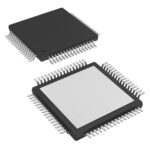 TLK2521IPAPG4
The activity of extra discounts on wholesale prices is in full swing…
Please fill in your contact information and we will send you the latest wholesale price list.





