 ChipApex | Global Electronic Components Supplier

SEARCH
Search Product
Search Post
Search productSearch post
Consult the customer manager about the wholesale price.
consultation hotline:86-132-6715-2157
email:[email protected]
Contact the product manager for consultation. One-stop consultation is available.
Do you want a lower wholesale price? Please send us your inquiry and we will reply immediately.
TLK2711AIRCPR is listed in the Drivers, Receivers, Transceivers range at ChipApex. The manufacturer field lists Texas Instruments. Its product description is IC TRANSCEIVER 16/16 64HVQFP. Review the specifications below when checking this part for your BOM.
The TLK2711A is a serializer/deserializer transceiver supporting serial data rates from 1.6 Gbps to 2.7 Gbps, providing up to 2.16 Gbps of payload bandwidth. It operates on a 2.5-V supply with typical power consumption under 450 mW and features 3-V tolerant parallel I/O. The device includes an on-chip PLL for clock synthesis, 8b/10b encoding/decoding, programmable preemphasis, and integrated 50-Ω termination resistors. It is available in an 80-pin BGA MicroStar Junior package or a 64-pin HVQFP (RCP) package, characterized for industrial temperatures between -40°C and 85°C.
Verify the specific ordering suffix against the manufacturer's current product status documentation. Confirm that the component meets RoHS compliance requirements for the intended deployment region. Ensure the selected package variant matches the design constraints, particularly noting that the industrial temperature range specification applies specifically to the RCP package option.
Select the TLK2711AIRCP when operation within the -40°C to 85°C industrial temperature range is required. Verify that the system reference clock frequency falls within the 80 MHz to 135 MHz range to support the desired serial data rate. Ensure the PCB layout accommodates the specific pinout and thermal dissipation characteristics of the chosen package type.
The TLK2711A belongs to the WizardLink family of multigigabit transceivers designed for ultrahigh-speed bidirectional data transmission. It serves as a physical layer interface device capable of converting parallel TTL data into serialized differential signals and vice versa. This architecture allows for significant reductions in board space and power consumption compared to traditional parallel interfaces.
The TLK2711AIRCPG4 is a documented lead-free version of this component. Verify if other members of the TLK27xx series offer compatible pinouts or performance specifications suitable for direct substitution in existing designs.
The receiver uses a comma detect circuit to identify unique 8-bit/10-bit synchronization patterns, aligning the received serial data back to its original byte boundary before decoding.
When asserted low, LCKREFN places the device in transmit-only mode by locking the receiver clock to the TXCLK reference and putting receive data terminals in a high-impedance state.
Preemphasis levels are controlled by the PRE terminal; pulling it low provides 5% preemphasis, while pulling it high provides 20% preemphasis to compensate for AC loss.
Explore related parts through Interface, Integrated Circuits (ICs), all product categories, ChipApex homepage.
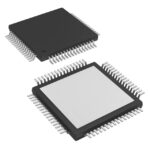 TLK2711AIRCPR

The activity of extra discounts on wholesale prices is in full swing…
Please fill in your contact information and we will send you the latest wholesale price list.







