ChipApex | Global Electronic Components Supplier
SEARCH
Search Product
Search Post
— IC芯片 | 连接器 | 传感器 | 被动器件 —
Search productSearch post
— IC芯片 | 连接器 | 传感器 | 被动器件 —
Consult the customer manager about the wholesale price.
consultation hotline:86-132-6715-2157
email:[email protected]
Contact the product manager for consultation. One-stop consultation is available.
Do you want a lower wholesale price? Please send us your inquiry and we will reply immediately.
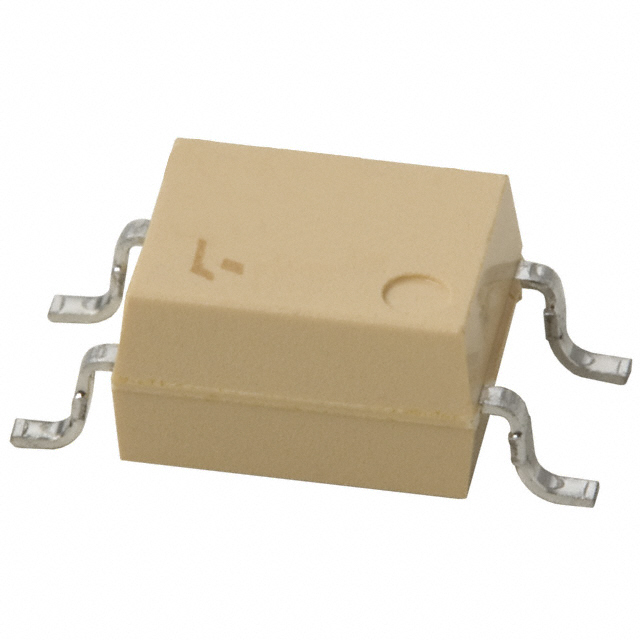
The TLP127(DEL-TPR,F) is a high-speed phototransistor output optocoupler manufactured by Toshiba Semiconductor and Storage. It features a GaAlAs LED coupled to a silicon phototransistor within a compact DIP4 package. Key electrical characteristics include a collector-emitter voltage of 80V, an emitter-collector voltage of 8V, and a collector current of 50mA. The device offers a high current transfer ratio and fast switching times, with a typical propagation delay of 3 microseconds. It operates within a temperature range of -40°C to +100°C and provides enhanced insulation performance suitable for industrial applications.
Verify the specific suffix DEL-TPR,F against official Toshiba documentation to confirm tape and reel packaging specifications. Ensure compatibility with automated assembly processes if reel quantity requirements are critical. Cross-reference the datasheet revision date to confirm the latest electrical parameters and mechanical dimensions before finalizing procurement orders.
Select this component when high-speed isolation is required alongside standard phototransistor output characteristics. Consider the CTR range and propagation delay limits relative to your circuit timing requirements. Evaluate the insulation voltage rating against system safety standards. Compare power dissipation capabilities under expected operating temperatures to ensure thermal reliability.
This part belongs to Toshiba's TLP12x series of high-speed optocouplers. The series is designed for general-purpose isolation applications where speed and reliability are prioritized over high current handling capacity. The TLP127 variant specifically targets applications requiring faster switching than standard optocouplers while maintaining cost-effectiveness through its simple phototransistor output structure.
Consult official Toshiba substitution guides for verified equivalents. Generic replacements may differ in propagation delay or CTR consistency. Verify pinout compatibility and insulation ratings before integrating alternative components into existing designs without re-validation.
 TLP127(DEL-TPR,F)
The activity of extra discounts on wholesale prices is in full swing…
Please fill in your contact information and we will send you the latest wholesale price list.