 ChipApex | Global Electronic Components Supplier
SEARCH
Search Product
Search Post
— IC芯片 | 连接器 | 传感器 | 被动器件 —
Search productSearch post
— IC芯片 | 连接器 | 传感器 | 被动器件 —
Consult the customer manager about the wholesale price.
consultation hotline:86-132-6715-2157
email:[email protected]
Contact the product manager for consultation. One-stop consultation is available.
Do you want a lower wholesale price? Please send us your inquiry and we will reply immediately.
The TLP184(GB-TPL,E) is a single-channel transistor output optocoupler manufactured by Toshiba. It integrates an infrared LED and an NPN phototransistor within a compact SOIC-6 surface-mount package. The device provides electrical isolation with a rated insulation voltage of 3750 Vrms. Key electrical parameters include a maximum collector-emitter voltage of 80 V, a maximum collector current of 50 mA, and a forward voltage of 1.4 V at a forward current of 16 mA. The typical current transfer ratio ranges from 100% to 400%. Switching characteristics feature a rise time of 2 µs and a fall time of 3 µs. Power dissipation is specified at 100 mW, with an operating temperature range spanning from -55°C to +110°C.
Verify the specific suffix designation against official Toshiba documentation to confirm packaging type and performance tolerances. Confirm component availability status as some variants may be designated as not recommended for new designs. Ensure compliance with RoHS standards and check for any product change notifications prior to procurement.
Select this component when high isolation voltage and fast switching speeds are required in a small form factor. Consider the 80V output voltage limit and 50mA current capacity for load requirements. Evaluate the thermal management needs given the 100mW power dissipation rating and wide operating temperature range.
This part belongs to the TLP184 series of transistor output optocouplers. The series is characterized by its use in general-purpose isolation applications requiring reliable signal transfer across isolated boundaries. The specific model denotes a variant optimized for surface-mount technology with defined electrical characteristics.
Direct substitutes within the same family include TLP184(GB,E) and TLP184(E). Verify pinout compatibility and electrical parameter equivalence before substitution. Check datasheets for differences in packaging or specific performance metrics.
The maximum insulation voltage is 3750 Vrms.
The typical rise time is 2 µs and the fall time is 3 µs.
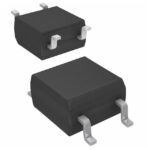 TLP184(GB-TPL,E)
The activity of extra discounts on wholesale prices is in full swing…
Please fill in your contact information and we will send you the latest wholesale price list.





