 ChipApex | Global Electronic Components Supplier
SEARCH
Search Product
Search Post
— IC芯片 | 连接器 | 传感器 | 被动器件 —
Search productSearch post
— IC芯片 | 连接器 | 传感器 | 被动器件 —
Consult the customer manager about the wholesale price.
consultation hotline:86-132-6715-2157
email:[email protected]
Contact the product manager for consultation. One-stop consultation is available.
Do you want a lower wholesale price? Please send us your inquiry and we will reply immediately.
The TLV320AIC24IPFB is a low-power, highly integrated stereo audio CODEC manufactured by Texas Instruments. It features two 16-bit oversampling sigma-delta analog-to-digital converters and two digital-to-analog converters. The device supports programmable sampling rates up to 26 ksps with on-chip IIR/FIR filters enabled, or up to 104 ksps when the filters are bypassed. It operates with an analog supply voltage range of 2.7 V to 3.6 V and a digital core supply of 1.65 V to 1.95 V. The component utilizes a SMARTDM serial interface for DSP connectivity and includes built-in microphone, handset, and headset amplifiers.
Verify the specific suffix 'IPFB' against the manufacturer's current Package Option Addendum to confirm the 48-TQFP package configuration. Ensure the temperature grade matches the required operational environment, as industrial variants carry distinct ordering codes. Cross-reference the datasheet revision date to confirm compatibility with existing design specifications.
Select this component for applications requiring low power consumption and high integration in voice-band processing. Verify that the host processor supports the SMARTDM serial protocol or can be configured for standard TDM operation. Confirm that the available master clock frequency allows for the desired sampling rate derivation using the internal PLL or direct division methods specified in the timing requirements.
This part belongs to the TLV320AIC2x family of audio CODECs from Texas Instruments. The family shares common architectural features but varies in temperature ratings and specific analog output capabilities. The 'I' designation indicates industrial temperature range characterization, while the 'K' series variants typically denote enhanced performance specifications compared to the standard AIC24 model.
The TLV320AIC20IPFB and TLV320AIC21IPFB are functionally similar within the same package. The TLV320AIC24KIPFB offers improved dynamic performance metrics. Verify pinout compatibility and register mapping before substitution to ensure seamless integration into existing firmware and hardware designs.
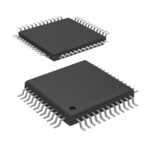 TLV320AIC24IPFB
The activity of extra discounts on wholesale prices is in full swing…
Please fill in your contact information and we will send you the latest wholesale price list.






