 ChipApex | Global Electronic Components Supplier
SEARCH
Search Product
Search Post
— IC芯片 | 连接器 | 传感器 | 被动器件 —
Search productSearch post
— IC芯片 | 连接器 | 传感器 | 被动器件 —
Consult the customer manager about the wholesale price.
consultation hotline:86-132-6715-2157
email:[email protected]
Contact the product manager for consultation. One-stop consultation is available.
Do you want a lower wholesale price? Please send us your inquiry and we will reply immediately.
The TLV431ACDBZR is a low-voltage, three-terminal adjustable precision shunt regulator manufactured by Texas Instruments. It operates within an output voltage range of 1.24 V to 6 V and features an initial accuracy of ±1%. The device utilizes a SOT-23-3 surface-mount package with dimensions of 2.92 mm in length, 1.3 mm in width, and 1 mm in height. It supports a maximum cathode current of 15 mA and maintains a typical output impedance of 0.25 Ω. The component functions across a temperature range of 0°C to +70°C with a temperature coefficient of 138 ppm/°C.
Verify the specific suffix 'ACDBZR' to confirm the ±1% accuracy grade and commercial temperature range (0°C to +70°C). Ensure the ordering code matches the SOT-23-3 tape-and-reel packaging format required for automated assembly processes. Cross-reference the manufacturer part number against official datasheets to validate RoHS compliance status and lead time specifications before finalizing procurement orders.
Select this component when designing circuits requiring a precision reference below 6 V with tight tolerance requirements. The low minimum operating voltage makes it ideal for battery-powered or low-voltage logic systems where standard Zener diodes lack sufficient accuracy. Consider the thermal performance and package size constraints when choosing between this variant and other accuracy grades within the TLV431 family.
This device belongs to the TLV431 series of adjustable shunt regulators designed as low-voltage alternatives to traditional TL431 components. It integrates a bandgap reference and error amplifier to provide stable regulation in compact surface-mount packages. The series is widely utilized in modern power management designs requiring small form factors and high precision for feedback control loops.
Direct substitutes include the TLV431AIDBZR for identical electrical specifications with potentially different manufacturing lots. For higher accuracy requirements, consider the TLV431BAIDBZR variant. Verify pinout compatibility and thermal characteristics when replacing legacy TL431 devices in existing PCB layouts.
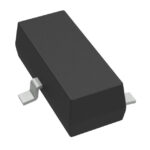 TLV431ACDBZR
The activity of extra discounts on wholesale prices is in full swing…
Please fill in your contact information and we will send you the latest wholesale price list.





