 ChipApex | Global Electronic Components Supplier
SEARCH
Search Product
Search Post
— IC芯片 | 连接器 | 传感器 | 被动器件 —
Search productSearch post
— IC芯片 | 连接器 | 传感器 | 被动器件 —
Consult the customer manager about the wholesale price.
consultation hotline:86-132-6715-2157
email:[email protected]
Contact the product manager for consultation. One-stop consultation is available.
Do you want a lower wholesale price? Please send us your inquiry and we will reply immediately.
The TLVH431DMQDBZR is a low voltage three-terminal shunt regulator from the TLVH431 family, manufactured by NXP. It features D-Grade reference voltage tolerance of 0.75%, with a typical Vref of 1240 mV at 25 °C and IK = 10 mA. The device operates within an ambient temperature range of -40 °C to 125 °C and supports programmable output voltages up to 18 V using two external resistors. It utilizes SOT23 (TO-236AB) packaging with mirrored pinning configuration. The component is AEC-Q100 qualified for automotive applications.
Verify the specific suffix 'MQ' indicates the mirrored pinning configuration required for your PCB layout, as standard versions use normal pinning. Confirm that the D-Grade tolerance meets your circuit's accuracy requirements compared to Standard or A-Grades. Ensure the operating temperature range of -40 °C to 125 °C aligns with your system's thermal environment. Check for any recent product change notices regarding the manufacturing site code marking.
Select this part when automotive qualification and tight voltage tolerance are critical. The mirrored pinout requires distinct footprint design compared to standard TLVH431 variants. Consider the thermal resistance characteristics if high cathode currents near 70 mA are expected. Verify compatibility with existing resistor divider networks for the desired output voltage setting between 1.24 V and 18 V.
This component belongs to the TLVH431 family of low voltage adjustable precision shunt regulators. It serves as a replacement for Zener diodes in on-board regulation and switching power supplies. The family includes Standard, A, and D grades with varying tolerances and temperature ranges, all sharing similar functional architectures but differing in precision and automotive qualification status.
TLVH431DQDBZR offers identical electrical specifications and D-Grade tolerance but uses normal pinning instead of mirrored pinning. TLVH431AQDBZR provides A-Grade (1%) tolerance with normal pinning. TLVH431IDBZR offers Standard grade performance with normal pinning. Direct pin-compatible substitution requires matching the pinning configuration (normal vs. mirrored).
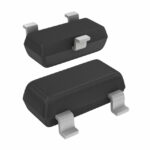 TLVH431DMQDBZR,215
The activity of extra discounts on wholesale prices is in full swing…
Please fill in your contact information and we will send you the latest wholesale price list.





