 ChipApex | Global Electronic Components Supplier
SEARCH
Search Product
Search Post
— IC芯片 | 连接器 | 传感器 | 被动器件 —
Search productSearch post
— IC芯片 | 连接器 | 传感器 | 被动器件 —
Consult the customer manager about the wholesale price.
consultation hotline:86-132-6715-2157
email:[email protected]
Contact the product manager for consultation. One-stop consultation is available.
Do you want a lower wholesale price? Please send us your inquiry and we will reply immediately.
The TLVH431NMQDBZR-QVL is a three-terminal adjustable precision shunt regulator from the Nexperia TLVH431N-Q family. It operates within a cathode-anode voltage range of Vref to 14 V and supports a sink current capability between 0.08 mA and 70 mA. The device features an A-Grade reference voltage tolerance of 1.0%, with a typical reference voltage of 1240 mV at 25 °C. It utilizes mirrored pinning in an SOT23 package, where Pin 1 is Cathode, Pin 2 is Reference, and Pin 3 is Anode. Qualified according to AEC-Q100 Grade 1, it functions across a temperature range of -40 °C to 125 °C.
Verify that the ordering suffix matches the required pinning configuration, as the MQDBZR variant specifies mirrored pinning distinct from standard versions. Confirm the A-Grade tolerance requirement aligns with the 1.0% specification. Ensure the design accommodates the specified thermal resistance values for the target PCB mounting conditions. Cross-reference the marking code '8U%' to validate the component identity upon receipt.
Select this component when automotive qualification and high-precision voltage referencing are required. The mirrored pinout necessitates specific PCB footprint adjustments compared to standard pinning configurations. Designers must account for the 14 V maximum cathode-anode voltage limit. Verify stability boundaries regarding load capacitance and equivalent series resistance for the intended operating temperature range.
This part belongs to the TLVH431N-Q family of low-voltage adjustable precision shunt regulators manufactured by Nexperia. The family includes variants with normal and mirrored pinning, covering Standard-Grade (1.5%) and A-Grade (1.0%) tolerances. These devices serve as replacements for Zener diodes in on-board regulation and adjustable power supply applications.
Direct substitutes within the same family include TLVH431NAQDBZR-Q, which shares the A-Grade tolerance but utilizes normal pinning instead of mirrored pinning. Other family members like TLVH431NACDBZR-Q offer identical electrical characteristics but differ in operating temperature range or pin configuration.
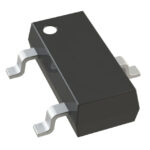 TLVH431NMQDBZR-QVL
The activity of extra discounts on wholesale prices is in full swing…
Please fill in your contact information and we will send you the latest wholesale price list.





