 ChipApex | Global Electronic Components Supplier
SEARCH
Search Product
Search Post
— IC芯片 | 连接器 | 传感器 | 被动器件 —
Search productSearch post
— IC芯片 | 连接器 | 传感器 | 被动器件 —
Consult the customer manager about the wholesale price.
consultation hotline:86-132-6715-2157
email:[email protected]
Contact the product manager for consultation. One-stop consultation is available.
Do you want a lower wholesale price? Please send us your inquiry and we will reply immediately.
The TLVH431QDBZT is a low-voltage adjustable precision shunt regulator from Texas Instruments, housed in an SOT-23-3 surface-mount package. It features an initial accuracy of 1% and a temperature coefficient of 138 PPM/C. The device supports an adjustable output voltage range up to a maximum of 18 V, with a maximum series input voltage of 20 V. It operates within a wide current range, supporting a minimum cathode current of 80 µA and a maximum shunt current of 80 mA. The component is rated for operation between -40°C and +125°C.
Verify the specific suffix 'Q' indicates automotive qualification status as per official documentation. Confirm the package type matches SOT-23-3 requirements. Ensure the ordering part number aligns with the exact accuracy and temperature coefficient specifications listed. Cross-reference with the manufacturer's latest datasheet to confirm RoHS compliance and environmental classifications before procurement.
Select this component when a compact SOT-23-3 footprint is required for space-constrained designs. Choose based on the need for 1% initial accuracy and a 138 PPM/C temperature coefficient. Consider the 80 mA maximum shunt current capability for load regulation needs. Verify that the -40°C to +125°C operating temperature range meets the application's environmental demands.
This part belongs to the TLVH431 family of low-voltage adjustable precision shunt regulators. It serves as a three-terminal voltage reference alternative to traditional bandgap references. The device integrates a 1.24 V reference, error amplifier, and output transistor in a small package, enabling cost-effective solutions for voltage regulation and monitoring tasks in modern electronic systems.
Check for direct substitutes such as TLVH431AQDBZT or TLVH431IDBZT depending on required accuracy levels. Verify pin compatibility and package dimensions for seamless replacement. Ensure electrical parameters like maximum shunt current and operating voltage ranges are compatible with the existing circuit design.
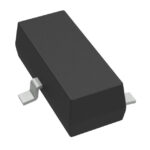 TLVH431QDBZT
The activity of extra discounts on wholesale prices is in full swing…
Please fill in your contact information and we will send you the latest wholesale price list.





