 ChipApex | Global Electronic Components Supplier
SEARCH
Search Product
Search Post
— IC芯片 | 连接器 | 传感器 | 被动器件 —
Search productSearch post
— IC芯片 | 连接器 | 传感器 | 被动器件 —
Consult the customer manager about the wholesale price.
consultation hotline:86-132-6715-2157
email:[email protected]
Contact the product manager for consultation. One-stop consultation is available.
Do you want a lower wholesale price? Please send us your inquiry and we will reply immediately.
The TLVH432ACDBZT is a low-voltage adjustable precision shunt regulator manufactured by Texas Instruments. It operates within a supply voltage range of 2.5 V to 20 V and provides an adjustable output voltage from 1.24 V to 18 V. The device features an initial accuracy of 1.5% and a temperature coefficient of 138 ppm/°C. It supports a maximum cathode current of 80 mA with a minimum operating current of 80 µA. The component functions reliably across an extended industrial temperature range of -40°C to +125°C and is housed in a compact SOT-23-3 surface-mount package.
Verify the specific suffix 'Q' if automotive qualification is required, as standard commercial versions may lack this designation. Confirm the package type matches the design footprint. Check RoHS compliance status through official manufacturer documentation. Ensure the ordering part number aligns with the desired tape and reel or cut tape configuration. Validate that the thermal performance meets the system requirements for the selected application environment.
Select this component when low supply voltage operation is critical compared to standard 36 V regulators. Consider the 80 µA minimum current requirement for light-load stability. Evaluate the 1.5% accuracy against tighter tolerance needs where other variants might be more suitable. Verify the SOT-23-3 package dimensions fit the PCB layout constraints. Assess the thermal dissipation capabilities for the expected power levels in the target circuit.
This part belongs to the TLVH432 family of low-voltage adjustable shunt regulators. It serves as a high-precision reference element in power management circuits. The series is designed to replace traditional higher-voltage references in modern low-power systems. It shares functional similarities with the TL432 but offers optimized performance for lower voltage rails.
Direct substitutes include the TLVH432BQDBZR for higher accuracy options. The TLVH432ACDBZR is available in reel packaging. Standard TL432 variants operate at higher voltages and may require circuit adjustments.
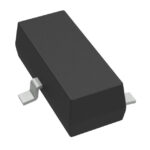 TLVH432ACDBZT
The activity of extra discounts on wholesale prices is in full swing…
Please fill in your contact information and we will send you the latest wholesale price list.





