 ChipApex | Global Electronic Components Supplier
SEARCH
Search Product
Search Post
— IC芯片 | 连接器 | 传感器 | 被动器件 —
Search productSearch post
— IC芯片 | 连接器 | 传感器 | 被动器件 —
Consult the customer manager about the wholesale price.
consultation hotline:86-132-6715-2157
email:[email protected]
Contact the product manager for consultation. One-stop consultation is available.
Do you want a lower wholesale price? Please send us your inquiry and we will reply immediately.
The TMUX1219DBVRQ1 is a single-channel, 2:1 (SPDT) analog switch from Texas Instruments, qualified under AEC-Q100 for automotive use. It operates on a supply voltage range of 1.08V to 5.5V and supports bidirectional signals from GND to VDD. The device features a low on-resistance of 3Ω at 5V, a maximum transition time of 14ns, and an extremely low supply current of 4nA. It includes fail-safe logic allowing control voltages up to 5.5V regardless of the supply state, and provides ESD protection rated at ±2000V HBM. The component is housed in a compact SOT-23-6 package.
Verify the specific ordering suffix DBVRQ1 corresponds to the SOT-23-6 package and reel packaging configuration required for your assembly process. Confirm that the AEC-Q100 Grade 1 rating meets your specific automotive reliability standards. Ensure the design accommodates the recommended decoupling capacitor values between the VDD and GND pins for stable operation.
Select this component when designing for automotive environments requiring high reliability and wide operating temperatures. The 1.8V logic compatibility allows direct interfacing with modern microcontrollers without level shifters. Consider the low leakage current and break-before-make switching characteristics for applications demanding precise signal isolation and glitch-free transitions.
This part belongs to the TMUX1219-Q1 family of general-purpose CMOS switches. It shares functional similarities with other members of the series but is specifically designated for automotive applications through its Q1 suffix. The device serves as a versatile solution for signal routing in complex electronic architectures where space and power efficiency are critical constraints.
Direct replacements within the same family include the non-automotive TMUX1219 variants such as TMUX1219DCKR or TMUX1219DBVR. These parts share identical electrical specifications but lack the specific automotive qualification documentation. Verify package compatibility and ensure the application does not strictly require the AEC-Q100 certification before substituting.
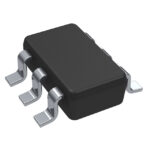 TMUX1219DBVRQ1
The activity of extra discounts on wholesale prices is in full swing…
Please fill in your contact information and we will send you the latest wholesale price list.





