 ChipApex | Global Electronic Components Supplier
SEARCH
Search Product
Search Post
— IC芯片 | 连接器 | 传感器 | 被动器件 —
Search productSearch post
— IC芯片 | 连接器 | 传感器 | 被动器件 —
Consult the customer manager about the wholesale price.
consultation hotline:86-132-6715-2157
email:[email protected]
Contact the product manager for consultation. One-stop consultation is available.
Do you want a lower wholesale price? Please send us your inquiry and we will reply immediately.
The TMUX6219DGKRQ1 is a single-channel, 2:1 (SPDT) analog switch manufactured by Texas Instruments. It operates on a single supply voltage ranging from 4.5 V to 36 V, or dual supplies of ±4.5 V to ±18 V. The device supports bidirectional analog and digital signals across source and drain pins within the supply range. Key electrical parameters include a maximum on-resistance of 2.9 Ohms, a maximum propagation delay of 170 ns, and a maximum power dissipation of 460 mW. It functions reliably within an operating temperature range of -40°C to +125°C and is housed in an 8-pin VSSOP package.
Verify the specific suffix DGKRQ1 against official Texas Instruments documentation to confirm automotive qualification status and package type. Ensure the ordering information matches the required RoHS compliance and tape-and-reel specifications. Cross-reference the manufacturer part number with authorized distributors to validate authenticity and current availability status before procurement.
Select this component when designing circuits requiring a single SPDT switch capable of handling wide voltage swings up to 36 V. Consider its low on-resistance and fast switching speeds for applications demanding minimal signal distortion. Verify that the 1.8 V logic compatibility aligns with the controlling microcontroller or processor interface levels used in the design.
This device belongs to the TMUX621x family of CMOS analog switches, which includes variants like the TMUX6219RQXR. While sharing core architectural features such as wide supply ranges and low leakage, specific suffixes indicate differences in packaging, automotive qualification, or manufacturing lot. The DGKRQ1 variant specifically denotes the VSSOP-8 package configuration tailored for space-constrained automotive applications.
The TMUX6219RQXR serves as a functional alternative within the same series. Engineers should verify pinout compatibility and ensure that any substitute maintains the required 36 V supply rating and SPDT configuration. Confirm that the replacement part meets the same AEC-Q100 automotive reliability standards if used in qualified automotive environments.
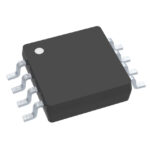 TMUX6219DGKRQ1
The activity of extra discounts on wholesale prices is in full swing…
Please fill in your contact information and we will send you the latest wholesale price list.





