ChipApex | Global Electronic Components Supplier
SEARCH
Search Product
Search Post
— IC芯片 | 连接器 | 传感器 | 被动器件 —
Search productSearch post
— IC芯片 | 连接器 | 传感器 | 被动器件 —
Consult the customer manager about the wholesale price.
consultation hotline:86-132-6715-2157
email:[email protected]
Contact the product manager for consultation. One-stop consultation is available.
Do you want a lower wholesale price? Please send us your inquiry and we will reply immediately.
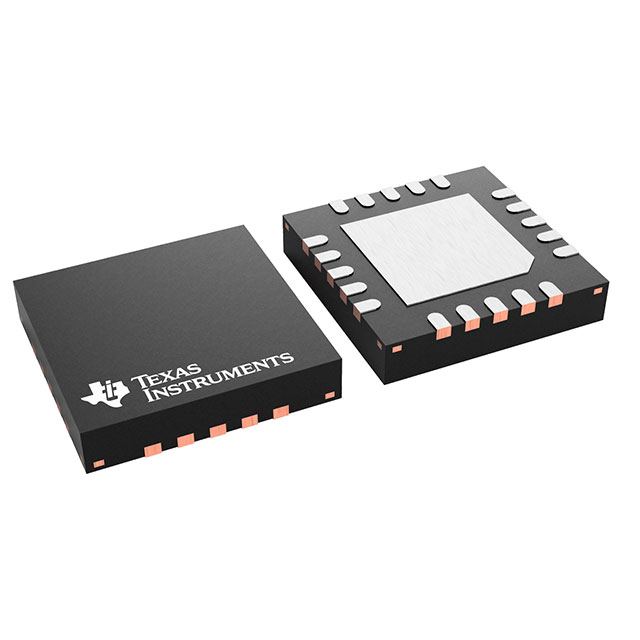
The TMUX7234RRQR is a four-channel, 2:1 single-pole double-throw (SPDT) analog switch manufactured by Texas Instruments. It operates on a single supply voltage ranging from 4.5 V to 44 V or dual supplies from ±4.5 V to ±22 V. The device features latch-up immunity and supports bidirectional analog and digital signals across the full supply range. Key electrical parameters include a maximum on-resistance of 5.8 Ω at 44 V single supply, 3 pC charge injection, and a maximum continuous current of 400 mA in the WQFN package. Logic inputs are compatible with 1.8 V thresholds, and it includes an active-low enable pin.
Verify the specific RRQR suffix indicates the WQFN-20 package configuration when sourcing. Confirm that the component meets RoHS standards as specified in the manufacturer documentation. Ensure compatibility with standard surface-mount assembly processes for the 4 mm x 4 mm footprint. Check for moisture sensitivity levels if storage conditions exceed recommended limits prior to soldering.
Select this component for applications requiring high-voltage signal routing up to 44 V with low distortion. The four independent SPDT channels allow flexible multiplexing configurations. Consider the thermal performance of the WQFN package for high-power dissipation scenarios. Verify that the 1.8 V logic compatibility matches the system's microcontroller or FPGA output levels.
This part belongs to the TMUX72xx family of precision switches designed for harsh environments. The RRQR suffix specifically denotes the 20-pin Wettable Flanks Quad Flat No-leads (WQFN) package. This family emphasizes reliability through latch-up immunity and robust protection against electrostatic discharge events during manufacturing and operation.
The TMUX7234PWR serves as a pin-compatible alternative using a TSSOP-20 package. Both parts share identical electrical characteristics and functionality within the same series. Selection between them depends primarily on board space constraints and thermal management requirements rather than performance differences.
 TMUX7234RRQR
The activity of extra discounts on wholesale prices is in full swing…
Please fill in your contact information and we will send you the latest wholesale price list.