 ChipApex | Global Electronic Components Supplier
SEARCH
Search Product
Search Post
— IC芯片 | 连接器 | 传感器 | 被动器件 —
Search productSearch post
— IC芯片 | 连接器 | 传感器 | 被动器件 —
Consult the customer manager about the wholesale price.
consultation hotline:86-132-6715-2157
email:[email protected]
Contact the product manager for consultation. One-stop consultation is available.
Do you want a lower wholesale price? Please send us your inquiry and we will reply immediately.
The TMUXHS4212RKSR is a high-speed bidirectional passive switch IC manufactured by Texas Instruments, housed in a 20-pin VQFN package measuring 2.5 mm × 4.5 mm. It functions as a two-channel differential 2:1 multiplexer or 1:2 demultiplexer, supporting data rates up to 16 Gbps for interfaces such as PCIe Gen 4.0 and USB 3.2. The device operates on a single supply voltage of either 1.8 V (1.71 V to 1.98 V) or 3.3 V (3.0 V to 3.6 V). Key electrical parameters include a maximum on-resistance of 8.4 Ω, a -3-dB bandwidth of 13 GHz, and an active current consumption of 180 μA. It supports a common mode voltage range of 0 V to 1.8 V with adaptive tracking.
Verify the specific ordering suffix 'RKSR' against the manufacturer's orderable addendum to confirm the exact reel quantity and tape specifications. Ensure the component matches the required temperature grade, as standard versions operate from 0°C to 70°C while industrial variants support -40°C to 105°C. Cross-reference the datasheet revision history for any updates to control pin voltages or thermal metrics before finalizing procurement.
Select this component when designing circuits requiring bidirectional switching for differential interfaces like PCIe or USB 3.2. Confirm that the system's common mode voltage remains within the 0 V to 1.8 V range to utilize the adaptive tracking feature effectively. Evaluate the board trace length and connector losses, as the device performs best where adequate signal integrity margins exist for the target data rate.
This part belongs to the TMUXHS4212 family of high-speed analog switches. The RKSR suffix denotes the specific packaging configuration, which is a 20-pin VQFN with a 2.5 mm × 4.5 mm body size. This family is designed for generic analog differential mux/demux applications, offering layout flexibility through multiple pinout options and robust performance at frequencies up to 16 Gbps.
Public confirmed substitute part numbers are not available in the provided documentation. Verify compatibility with existing designs by comparing pin configurations, specifically the SEL and OEn control logic, and ensuring the replacement supports the required common mode voltage range and data rates.
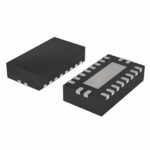 TMUXHS4212RKSR
The activity of extra discounts on wholesale prices is in full swing…
Please fill in your contact information and we will send you the latest wholesale price list.





