 ChipApex | Global Electronic Components Supplier
SEARCH
Search Product
Search Post
— IC芯片 | 连接器 | 传感器 | 被动器件 —
Search productSearch post
— IC芯片 | 连接器 | 传感器 | 被动器件 —
Consult the customer manager about the wholesale price.
consultation hotline:86-132-6715-2157
email:[email protected]
Contact the product manager for consultation. One-stop consultation is available.
Do you want a lower wholesale price? Please send us your inquiry and we will reply immediately.
The TP3064BN is a full-duplex PCM codec manufactured by Texas Instruments, distributed by Rochester Electronics. It implements the MU-LAW companding algorithm for audio signal processing. The device operates in both synchronous and asynchronous modes and includes integrated filtering capabilities. It is housed in a 20-pin plastic DIP package with an inline rectangular form factor. Electrical specifications include a negative supply rating of -5 V and a commercial operating temperature range from 0 °C to 70 °C. The component is lead-free and utilizes tin-silver copper solder finish.
Verify the manufacturer designation as Rochester Electronics, which acts as a commercial distributor for excess inventory rather than the original design entity. Confirm the specific package variant matches the PDIP-20 requirement. Ensure the MU-LAW functionality aligns with system standards. Check that the -5V negative supply rail compatibility fits the target circuit design constraints before finalizing acquisition.
Select this component when a legacy telecommunications interface requires a dedicated hardware codec for MU-LAW processing. The choice depends on the availability of a through-hole DIP-20 package for prototyping or low-volume manufacturing. Verify that the single-function architecture meets the channel count requirements without necessitating additional multiplexing logic. Consider the commercial temperature grade sufficient for the intended operational environment.
This part belongs to the family of PCM codecs designed for digital voice transmission. It serves as a specialized interface between analog audio signals and digital pulse code modulation networks. The device facilitates compliance with international telecommunication standards for voice digitization. Its role is critical in maintaining signal integrity during conversion processes in traditional telecom infrastructure.
Publicly confirmed substitute part numbers are not available in the provided documentation. Evaluate pin-compatible alternatives only if they explicitly support the same MU-LAW algorithm and -5V supply requirements. Verify functional equivalence regarding synchronous and asynchronous mode operations before considering any cross-reference.
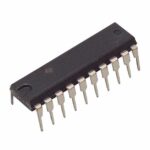 TP3064BN
The activity of extra discounts on wholesale prices is in full swing…
Please fill in your contact information and we will send you the latest wholesale price list.





