 ChipApex | Global Electronic Components Supplier
SEARCH
Search Product
Search Post
— IC芯片 | 连接器 | 传感器 | 被动器件 —
Search productSearch post
— IC芯片 | 连接器 | 传感器 | 被动器件 —
Consult the customer manager about the wholesale price.
consultation hotline:86-132-6715-2157
email:[email protected]
Contact the product manager for consultation. One-stop consultation is available.
Do you want a lower wholesale price? Please send us your inquiry and we will reply immediately.
The TP3070V-G/63SN is a second-generation COMBO II Programmable PCM CODEC and Filter optimized for digital switching applications on subscriber line and trunk cards. It integrates transmit bandpass and receive lowpass channel filters with A-law and µ-law selectable companding encoders and decoders. The device features a serial PCM interface clocked up to 4.096 MHz, programmable gains over a 25.4 dB range in 0.1 dB steps, and a hybrid balance cancellation filter exceeding 30 dB. It includes six programmable interface latches for SLIC control, operates on ±5 V supplies, and supports an extended temperature range of −40°C to +85°C.
Verify the specific suffix G/63SN against the manufacturer's current lifecycle status, as this indicates a lead-free (Green) package variant. Confirm that the extended temperature rating aligns with environmental requirements. Ensure the plastic LCC-28 package dimensions match the target PCB footprint. Cross-reference the datasheet revision to confirm pinout compatibility with existing designs.
Select this component when designing subscriber line circuits requiring integrated filtering and companding. The dual-port capability allows space switching implementation. Verify MCLK frequency options (512 kHz to 4.096 MHz) match the system clock. Ensure the 28-pin PLCC package fits the assembly constraints. Consider the power-down mode for standby efficiency in battery-sensitive environments.
This part belongs to the National Semiconductor (now Texas Instruments) COMBO II family, which combines CODEC and filter functions. It is functionally related to the TP3071, which lacks the second port and has fewer latches. The TP3070 series simplifies design by integrating analog filtering and PCM encoding into a single CMOS package, reducing external component count compared to first-generation discrete solutions.
The TP3070V-XG/NOPB is a confirmed equivalent within the same product family. Both share identical functional specifications and pinouts. Verify that the ordering suffix corresponds to the required temperature grade and packaging compliance before substitution.
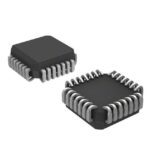 TP3070V-G/63SN
The activity of extra discounts on wholesale prices is in full swing…
Please fill in your contact information and we will send you the latest wholesale price list.






