 ChipApex | Global Electronic Components Supplier
SEARCH
Search Product
Search Post
— IC芯片 | 连接器 | 传感器 | 被动器件 —
Search productSearch post
— IC芯片 | 连接器 | 传感器 | 被动器件 —
Consult the customer manager about the wholesale price.
consultation hotline:86-132-6715-2157
email:[email protected]
Contact the product manager for consultation. One-stop consultation is available.
Do you want a lower wholesale price? Please send us your inquiry and we will reply immediately.
The TPA2000D1GQCR is a 2-W mono bridge-tied-load (BTL) Class-D audio power amplifier from Texas Instruments. It operates on a single supply voltage ranging from 2.7 V to 5.5 V and delivers 2 W of continuous output power into a 4-Ω load with less than 1% total harmonic distortion plus noise (THD+N). The device utilizes an optimized modulation scheme that eliminates the need for external LC output filters, resulting in low supply current of 4 mA without a filter. It features four internal gain settings selectable via GAIN0 and GAIN1 pins, integrated depop circuitry, and short-circuit protection.
Verify the specific package type matches the design requirements, as the TPA2000D1 series is available in both MicroStar Junior BGA and TSSOP packages. Confirm the ordering suffix corresponds to the desired tape and reel quantity or tube packaging. Ensure the component meets the required ambient temperature operating range of -40°C to 85°C for the intended application environment.
Select this amplifier when system constraints require eliminating bulky output filters to save board space and reduce electromagnetic interference shielding needs. Consider the variable input impedance associated with different gain settings when designing the input coupling network. Evaluate the thermal dissipation capabilities based on the chosen package option and expected ambient operating temperatures.
This component belongs to the TPA2000D family of Class-D audio amplifiers designed by Texas Instruments. The family focuses on providing high-efficiency audio amplification for portable electronics where battery life is critical. The specific model utilizes third-generation modulation technology to achieve improved signal-to-noise ratios and efficiency compared to traditional Class-D architectures.
Direct replacements within the same product line include the TPA2000D1PW variant, which offers identical electrical characteristics but utilizes a 16-pin TSSOP package instead of the MicroStar Junior BGA format. Designers must account for differences in pinout mapping and thermal pad configurations when transitioning between these package options.
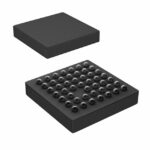 TPA2000D1GQCR
The activity of extra discounts on wholesale prices is in full swing…
Please fill in your contact information and we will send you the latest wholesale price list.






