 ChipApex | Global Electronic Components Supplier
SEARCH
Search Product
Search Post
— IC芯片 | 连接器 | 传感器 | 被动器件 —
Search productSearch post
— IC芯片 | 连接器 | 传感器 | 被动器件 —
Consult the customer manager about the wholesale price.
consultation hotline:86-132-6715-2157
email:[email protected]
Contact the product manager for consultation. One-stop consultation is available.
Do you want a lower wholesale price? Please send us your inquiry and we will reply immediately.
The TPA5050RSAR is a stereo digital audio lip-sync delay device manufactured by Texas Instruments, originally developed under the National Semiconductor brand. It operates on a single 3V to 3.6V supply with a typical current consumption of 3 mA at 48 kHz sampling frequency. The component accepts a single serial audio input and provides delayed output via I2C control. Key specifications include a maximum delay of 170 ms per channel at 48 kHz, support for 16- to 24-bit audio formats (I2S, Right-Justified, Left-Justified), and 5V-tolerant I/O. It utilizes a 16-pin QFN package.
Verify the manufacturer designation as Texas Instruments, which acquired National Semiconductor. Confirm the specific ordering suffix 'R' indicates reel packaging and 'A' denotes RoHS compliance. Ensure the 16-VQFN exposed pad thermal connection requirements are met during assembly.
Select this component when precise sample-level audio delay is required for video synchronization. Ensure the system supports I2C communication for register configuration. Verify that the available delay range (up to 8191 samples) meets the specific lip-sync offset requirements of the target application.
The TPA5050 is part of the TPA5050 series, which includes variants like the TPA5051 (four-channel) and TPA5052 (stereo). It serves as a specialized audio processor within Texas Instruments' portfolio for consumer electronics requiring digital audio timing adjustments.
The TPA5051 offers four-channel delay capabilities. The TPA5052 provides stereo delay without I2C control. Check datasheets for pin compatibility and register map differences before substitution.
The maximum delay is determined by the maximum number of samples (8191) divided by the sampling frequency. At 48 kHz, this results in approximately 170.65 ms.
The Complete Update register transfers user settings from the register file to the delay functional block simultaneously, preventing audio interruptions or pops during multi-register updates.
Yes, the device generates all internal clocks from the incoming audio bit clock (BCLK), eliminating the need for an external oscillator.
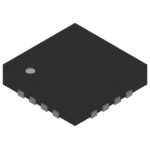 TPA5050RSAR
The activity of extra discounts on wholesale prices is in full swing…
Please fill in your contact information and we will send you the latest wholesale price list.





