 ChipApex | Global Electronic Components Supplier
SEARCH
Search Product
Search Post
— IC芯片 | 连接器 | 传感器 | 被动器件 —
Search productSearch post
— IC芯片 | 连接器 | 传感器 | 被动器件 —
Consult the customer manager about the wholesale price.
consultation hotline:86-132-6715-2157
email:[email protected]
Contact the product manager for consultation. One-stop consultation is available.
Do you want a lower wholesale price? Please send us your inquiry and we will reply immediately.
The TPCW-233+ is a miniature low temperature co-fired ceramic (LTCC) transmission line component manufactured by Mini-Circuits. It operates as a thru-line with a center frequency of 11.5GHz and supports a bandwidth from DC to 23 GHz. The device features a 50 Ohm impedance and utilizes a 0603 surface mount footprint. Key electrical specifications include a typical insertion loss of 0.15dB and a typical return loss of 21dB. The component is designed for high reliability within an operating temperature range of -55°C to +125°C.
Verify the specific ordering suffix and termination style to ensure compatibility with your PCB layout, as the component utilizes a 0603 surface mount footprint. Confirm that the 50 Ohm impedance matches your system requirements. Check datasheet notes regarding DC blocking capacitors if DC voltage or current is present at the ports. Ensure the operating temperature range of -55°C to +125°C aligns with your environmental conditions before finalizing procurement.
Select this component when a broadband thru-line is required between DC and 23 GHz with minimal signal degradation. The 0.15dB typical insertion loss makes it suitable for sensitive RF chains. Consider the 0603 footprint for space-constrained designs. Verify that the application does not require DC continuity, as external DC blocking may be necessary. This part serves as a generic interconnect rather than a frequency-selective filter.
This component belongs to Mini-Circuits' LTCC SMT Thru-Line family, which offers passive transmission solutions for RF and microwave frequencies. These parts are designed to replace discrete wire bonds or provide standardized interconnects in surface mount assemblies. The TPCW-233+ specifically targets applications needing a reliable, low-loss path across a wide bandwidth without active components or complex filtering structures.
Public confirmed substitute part numbers are not available in the provided documentation. Users should consult Mini-Circuits directly for equivalent LTCC thru-lines with similar impedance and frequency ranges.
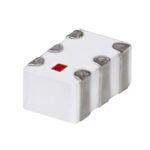 TPCW-233+
The activity of extra discounts on wholesale prices is in full swing…
Please fill in your contact information and we will send you the latest wholesale price list.




