 ChipApex | Global Electronic Components Supplier
SEARCH
Search Product
Search Post
— IC芯片 | 连接器 | 传感器 | 被动器件 —
Search productSearch post
— IC芯片 | 连接器 | 传感器 | 被动器件 —
Consult the customer manager about the wholesale price.
consultation hotline:86-132-6715-2157
email:[email protected]
Contact the product manager for consultation. One-stop consultation is available.
Do you want a lower wholesale price? Please send us your inquiry and we will reply immediately.
The TPIC6C596QDRCM is an automotive-grade, monolithic, medium-voltage, low-current 8-bit shift register from Texas Instruments. Designed for systems requiring moderate load power, it operates within a supply voltage range of 4.5 V to 5.5 V. The device features serial input and parallel output capabilities with open-drain outputs. It is housed in a 16-pin DRB (Hot-SIP) package suitable for surface-mount applications. The component supports a maximum frequency of 10 MHz and functions reliably across an operating temperature range of -40°C to +125°C.
Verify the specific suffix QDRCM against official Texas Instruments documentation to confirm automotive grade status and package type. Ensure the source provides valid RoHS compliance and REACH declarations. Cross-reference the manufacturer part number with the latest datasheet revision to avoid counterfeit components. Confirm lead times and packaging details directly with authorized distributors or TI sales representatives prior to ordering.
Select this component when automotive reliability and open-drain output capability are required for 8-bit shift register applications. It is suitable for replacing standard logic devices in automotive environments where higher voltage tolerance and thermal stability are necessary. Consider the DRB package constraints for PCB layout. Verify that the system supply voltage remains within the 4.5 V to 5.5 V range for optimal performance.
This device belongs to the TPIC6C series of Power Logic shift registers by Texas Instruments. These components bridge standard logic levels with power handling capabilities. The TPIC6C596 variant specifically offers 8-bit shifting with parallel latching. The 'Q' prefix indicates automotive qualification, while 'DRCM' specifies the surface-mount package configuration. This family is widely used in automotive electronics for controlling external loads.
Check for direct pin-compatible alternatives such as the TPIC6C596DR or TPIC6C596N if package differences are acceptable. Verify functional equivalence regarding current ratings and voltage limits before substitution. Ensure any replacement maintains the same automotive qualification level if required by the design.
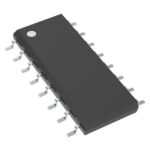 TPIC6C596QDRCM
The activity of extra discounts on wholesale prices is in full swing…
Please fill in your contact information and we will send you the latest wholesale price list.






