 ChipApex | Global Electronic Components Supplier
SEARCH
Search Product
Search Post
— IC芯片 | 连接器 | 传感器 | 被动器件 —
Search productSearch post
— IC芯片 | 连接器 | 传感器 | 被动器件 —
Consult the customer manager about the wholesale price.
consultation hotline:86-132-6715-2157
email:[email protected]
Contact the product manager for consultation. One-stop consultation is available.
Do you want a lower wholesale price? Please send us your inquiry and we will reply immediately.
The TPL5110DDCT is a nano-powered system timer manufactured by Texas Instruments, designed for ultra-low power applications. It features an integrated MOSFET driver to support power gating in duty-cycled or battery-operated systems. The device operates within a supply voltage range of 1.8 V to 5.5 V and consumes only 35 nA of quiescent current. Housed in a SOT-23-THIN-6 package, it supports surface-mount installation and functions reliably across a temperature range of -40°C to +105°C. This component enables significant reduction in total system standby current during sleep periods.
Verify the specific suffix 'DDCT' against the manufacturer's official datasheet to confirm packaging details such as reel size or tape-and-reel specifications. Ensure compatibility with standard SMD reflow processes for the SOT-23-THIN-6 package. Cross-reference the part number with authorized distributors to confirm current availability status and lead times, as supply constraints may vary by region.
Select the TPL5110DDCT when designing systems requiring minimal active current draw during idle states. Confirm that the external MOSFET driven by the internal gate matches the load requirements and voltage ratings. Verify that the timing interval settings align with the application's wake-up cycle. Ensure the PCB layout accommodates the small form factor while maintaining thermal performance within the specified -40°C to +105°C operating range.
This component belongs to the TPL5110 family of nano-power system timers from Texas Instruments. It serves as a specialized timer solution distinct from general-purpose watchdog timers by focusing on energy conservation through periodic power gating. The DDCT suffix indicates a specific packaging configuration, typically involving cut tape or reel options suitable for automated assembly lines.
The TPL5111 series offers similar functionality but may include additional features or variations in pinout. Verify electrical parameters and package dimensions before substitution. No direct cross-model substitutes are confirmed in the provided documentation without further technical comparison.


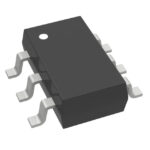 TPL5110DDCT
The activity of extra discounts on wholesale prices is in full swing…
Please fill in your contact information and we will send you the latest wholesale price list.



