 ChipApex | Global Electronic Components Supplier
SEARCH
Search Product
Search Post
— IC芯片 | 连接器 | 传感器 | 被动器件 —
Search productSearch post
— IC芯片 | 连接器 | 传感器 | 被动器件 —
Consult the customer manager about the wholesale price.
consultation hotline:86-132-6715-2157
email:[email protected]
Contact the product manager for consultation. One-stop consultation is available.
Do you want a lower wholesale price? Please send us your inquiry and we will reply immediately.
The TPL5110QDDCRQ1 is an AEC-Q100 qualified nano-power system timer designed for automotive power gating applications. It operates within a supply voltage range of 1.8 V to 5.5 V and consumes only 35 nA of quiescent current. The device features an integrated MOSFET driver capable of sourcing up to 200 mA, enabling direct control of external power switches. Packaged in a compact SOT-23-THIN-6 (DCR) surface-mount case, it supports operating temperatures from -40°C to +125°C. This component facilitates significant reduction in sleep-mode standby currents for battery-powered or energy-harvesting systems.
Verify the specific suffix 'Q' indicates AEC-Q100 automotive qualification and 'DCR' denotes the SOT-23-THIN-6 package variant. Confirm that the intended application requires the integrated MOSFET driver capability rather than a simple open-drain output, which distinguishes this model from the TPL5010 series. Ensure environmental compliance documentation matches regional regulatory requirements.
Select the TPL5110QDDCRQ1 when the design requires driving an external P-channel MOSFET directly without additional logic gates. Compare against the TPL5010Q if a watchdog timer function is strictly necessary instead of pure power gating. Verify that the load current does not exceed the 200 mA driver limit and that the PCB layout accommodates the thermal characteristics of the thin SOT-23 package under continuous operation.
This part belongs to the TPL5110 family of nano-power system timers. It serves as the automotive-grade counterpart to the commercial TPL5110DDCR. Unlike the TPL5010, which includes a watchdog timer, the TPL5110 focuses on precise timing for power gate control with higher drive strength. The Q1 suffix specifically identifies its compliance with automotive quality standards.
The TPL5110DDCR is the commercial equivalent but lacks automotive qualification. The TPL5111 offers similar functionality with different timing resolution options. Direct pin-to-pin replacement with TPL5010 variants is not possible due to differences in output stage architecture and internal circuitry.


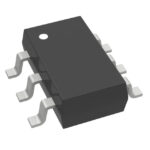 TPL5110QDDCRQ1
The activity of extra discounts on wholesale prices is in full swing…
Please fill in your contact information and we will send you the latest wholesale price list.



