 ChipApex | Global Electronic Components Supplier
SEARCH
Search Product
Search Post
— IC芯片 | 连接器 | 传感器 | 被动器件 —
Search productSearch post
— IC芯片 | 连接器 | 传感器 | 被动器件 —
Consult the customer manager about the wholesale price.
consultation hotline:86-132-6715-2157
email:[email protected]
Contact the product manager for consultation. One-stop consultation is available.
Do you want a lower wholesale price? Please send us your inquiry and we will reply immediately.
The TPR6040F20-S3TR is a high-precision shunt voltage reference from the 3PEAK TPR6040 family, featuring a fixed output voltage of 2.048 V. It belongs to Grade B with an initial accuracy tolerance of ±0.2% and a maximum temperature coefficient of 50 ppm/°C across the −40°C to +125°C operating range. The device supports a cathode current range from 150 μA to 15 mA and maintains stability with any capacitive load. Packaged in SOT23G-3, it offers low dynamic impedance and long-term stability for precision analog applications.
Verify the specific suffix 'S3TR' confirms tape-and-reel packaging containing 3000 units per reel. Confirm the 'F20' designation matches the required 2.048 V output voltage. Ensure the Grade B specification meets system accuracy requirements. Check RoHS compliance status as defined by manufacturer green standards.
Select this component when a fixed 2.048 V reference is required with ±0.2% initial accuracy. Choose Grade B over Grade A if cost optimization is prioritized while maintaining 50 ppm/°C stability. Consider the SOT23G-3 package for space-constrained PCB layouts requiring surface-mount assembly.
This part belongs to the TPR6040 series of high-precision shunt voltage references. The family includes variants with outputs ranging from 2.048 V to 5 V. All members share identical pinouts, thermal characteristics, and operational principles, differing only in their factory-trimmed output voltage and corresponding marking codes.
Direct substitutes within the same family include TPR6040F25-S3TR (2.5 V), TPR6040F30-S3TR (3 V), TPR6040F33-S3TR (3.3 V), TPR6040F40-S3TR (4.096 V), and TPR6040F50-S3TR (5 V). These parts are pin-compatible but provide different reference voltages.
The minimum operating cathode current is 150 μA across the full operating temperature range of −40°C to +125°C.
Pin 3 is designated as NC (No Connect). It must be left floating or connected directly to Pin 2 (Anode/Ground).
Yes, the datasheet explicitly states that the device is stable with any capacitive load, eliminating the need for isolation resistors in most applications.
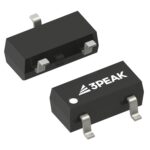 TPR6040F20-S3TR
The activity of extra discounts on wholesale prices is in full swing…
Please fill in your contact information and we will send you the latest wholesale price list.





