 ChipApex | Global Electronic Components Supplier
SEARCH
Search Product
Search Post
— IC芯片 | 连接器 | 传感器 | 被动器件 —
Search productSearch post
— IC芯片 | 连接器 | 传感器 | 被动器件 —
Consult the customer manager about the wholesale price.
consultation hotline:86-132-6715-2157
email:[email protected]
Contact the product manager for consultation. One-stop consultation is available.
Do you want a lower wholesale price? Please send us your inquiry and we will reply immediately.
The TPS2110APWR is an autoswitching power multiplexer manufactured by Texas Instruments in an 8-pin TSSOP package. It operates within a voltage range of 2.8 V to 5.5 V and supports a maximum output current of 0.75 A per input. The device features a typical on-resistance (rDS(on)) of 120 mΩ. It includes programmable current limiting, thermal shutdown, and reverse conduction blocking. The component functions with low standby current of 0.5 μA and operating current of 55 μA. It supports both manual and automatic switching modes for seamless power transitions between two sources.
Verify the specific suffix 'PWR' confirms the 8-TSSOP surface-mount package variant. Ensure the 'A' designation aligns with the required 120 mΩ on-resistance specification rather than lower resistance alternatives. Confirm RoHS compliance status matches project requirements. Validate that the operating temperature range covers the intended environmental conditions.
Select this component when a dual-input power path with automatic source selection is required for battery and adapter systems. Choose based on the 0.75 A current capability and 120 mΩ on-resistance trade-off. Consider the 8-TSSOP footprint for space-constrained designs. Evaluate the need for programmable current limiting versus fixed limits found in other series members.
This part belongs to the TPS211xA family of power multiplexers designed for portable applications. It serves as a bridge between primary and backup power sources. The device simplifies system design by integrating protection features typically requiring discrete components. It complements other PMIC solutions by handling power path management efficiently.
The TPS2111A offers similar functionality but with lower on-resistance and higher current capacity. Verify pin compatibility and electrical specifications before substitution. Ensure the alternative meets the same voltage and temperature requirements.
It supports both manual mode via control inputs and automatic mode based on voltage sensing, ensuring seamless transitions without interrupting the load.
The device includes thermal shutdown, reverse conduction blocking, cross-conduction blocking, and user-programmable current limiting.
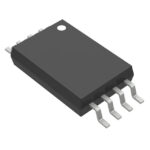 TPS2110APWR
The activity of extra discounts on wholesale prices is in full swing…
Please fill in your contact information and we will send you the latest wholesale price list.





