 ChipApex | Global Electronic Components Supplier
SEARCH
Search Product
Search Post
— IC芯片 | 连接器 | 传感器 | 被动器件 —
Search productSearch post
— IC芯片 | 连接器 | 传感器 | 被动器件 —
Consult the customer manager about the wholesale price.
consultation hotline:86-132-6715-2157
email:[email protected]
Contact the product manager for consultation. One-stop consultation is available.
Do you want a lower wholesale price? Please send us your inquiry and we will reply immediately.
The TPS2110PWR is an autoswitching power multiplexer manufactured by Texas Instruments, designed for efficient power source selection in portable electronics. It features a 2:1 input-to-output ratio with integrated N-channel FETs. The device operates within a supply voltage range of 2.8V to 5.5V and supports a maximum output current of 750mA. Typical on-resistance values are 120 milliohms for both inputs. The component functions across an extended temperature range from -40°C to +85°C and is housed in an 8-TSSOP package.
Verify the specific suffix PWR corresponds to the 8-TSSOP package configuration when sourcing. Confirm RoHS compliance status as indicated by manufacturer documentation. Ensure the operating temperature range meets the environmental requirements of the target application. Cross-reference the datasheet revision to confirm pinout and electrical characteristics remain consistent with design specifications.
Select this component for applications requiring automatic power path management between two sources. Consider the 750mA output limit and 120 milliohm resistance for load requirements. Evaluate the 2.8V to 5.5V operating range against system voltages. The TSSOP package suits surface-mount assembly processes. Compare against similar muxes if higher current capacity or different package types are needed.
The TPS2110 series belongs to Texas Instruments' portfolio of power switch ICs focused on power distribution and source selection. This family includes variants like the TPS2111A and TPS2112A, which offer different current ratings and on-resistance characteristics. The TPS2110PWR specifically denotes the automotive-grade or industrial-grade variant in the standard TSSOP-8 form factor within this product line.
TPS2110APWR serves as a direct functional equivalent within the same package and specification set. Designers may also consider the TPS2111A for increased current handling capabilities or the TPS2112A for alternative resistance profiles, provided the pinout compatibility and voltage ranges align with the existing circuit design.
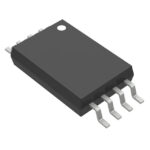 TPS2110PWR
The activity of extra discounts on wholesale prices is in full swing…
Please fill in your contact information and we will send you the latest wholesale price list.







