 ChipApex | Global Electronic Components Supplier
SEARCH
Search Product
Search Post
— IC芯片 | 连接器 | 传感器 | 被动器件 —
Search productSearch post
— IC芯片 | 连接器 | 传感器 | 被动器件 —
Consult the customer manager about the wholesale price.
consultation hotline:86-132-6715-2157
email:[email protected]
Contact the product manager for consultation. One-stop consultation is available.
Do you want a lower wholesale price? Please send us your inquiry and we will reply immediately.
The TPS2112APW is an autoswitching power multiplexer manufactured by Texas Instruments, designed for efficient power distribution in compact electronic systems. It features a single output sourced from two inputs, supporting a maximum output current of 750 mA with a typical on-resistance of 120 mΩ per input channel. The device operates within a supply voltage range of 2.8 V to 5.5 V and functions reliably across an extended temperature range from -40°C to +85°C. Key timing specifications include a maximum turn-on delay of 500 µs and a maximum turn-off delay of 3 ms. Packaged in an 8-pin TSSOP surface-mount format, it integrates internal switches for seamless source selection.
Verify that the specific part number TPS2112APW corresponds to the non-reel tape version (PW suffix) rather than the reel variant (PWR suffix). Confirm RoHS compliance status and ensure the supplier provides official datasheets matching the Texas Instruments specification. Check for any recent product change notices regarding marking or assembly updates before finalizing procurement orders.
Select this component when a dual-input power mux with 750 mA continuous current capability is required. Ensure the application voltage does not exceed 5.5 V and that the thermal environment stays within the -40°C to +85°C operating range. Consider the 120 mΩ on-resistance impact on efficiency and compare against higher-current alternatives if load requirements exceed specified limits.
The TPS2112A belongs to the TPS211x series of autoswitching power multiplexers from Texas Instruments. This family includes variants like the TPS2113A, which offers different current ratings and on-resistance characteristics. The TPS2112A specifically targets applications requiring moderate current handling with automatic source selection, distinguishing it from simple OR controllers or ideal diode bridges.
The TPS2113A is a documented substitute within the same family, offering similar functionality but with different electrical parameters such as lower on-resistance and higher current capacity. Verify pin compatibility and electrical specifications before substitution.
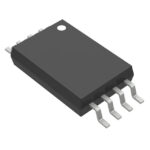 TPS2112APW
The activity of extra discounts on wholesale prices is in full swing…
Please fill in your contact information and we will send you the latest wholesale price list.





