 ChipApex | Global Electronic Components Supplier
SEARCH
Search Product
Search Post
— IC芯片 | 连接器 | 传感器 | 被动器件 —
Search productSearch post
— IC芯片 | 连接器 | 传感器 | 被动器件 —
Consult the customer manager about the wholesale price.
consultation hotline:86-132-6715-2157
email:[email protected]
Contact the product manager for consultation. One-stop consultation is available.
Do you want a lower wholesale price? Please send us your inquiry and we will reply immediately.
The TPS2113APWRG4 is an autoswitching power multiplexer manufactured by Texas Instruments. It operates within a supply voltage range of 2.8V to 5.5V and features a typical on-resistance of 84mΩ. The device supports a maximum output current of 1.25A, with configurable current limits ranging from 630mA to 2A. It includes automatic switching between two inputs to a single output, ensuring seamless power source transitions. The component has a quiescent current of 55μA and operates across a temperature range of -40°C to +85°C. It is housed in an 8-pin TSSOP package.
Verify the specific suffix 'G4' against the official Texas Instruments datasheet to confirm it denotes lead-free compliance or specific tape-and-reel packaging variations. Ensure the ordering part number matches the exact package type and environmental rating required for the design. Cross-reference the manufacturer's latest documentation to confirm availability and any potential obsolescence notices before finalizing procurement plans.
Select this component when designing systems that require automatic transition between two power sources without manual intervention. It is suitable for applications needing low insertion loss and high efficiency due to its low on-resistance. Consider the 1.25A output current capability and the 2.8V to 5.5V operating range to ensure compatibility with system voltage rails. The integrated status output simplifies monitoring requirements compared to discrete solutions.
The TPS2113A series belongs to Texas Instruments' portfolio of power multiplexers designed for portable electronics. This family provides robust power path management with minimal external component requirements. The TPS2113APWRG4 variant specifically utilizes the TSSOP-8 package, offering a compact solution for space-constrained designs while maintaining high performance in power switching applications.
The TPS2112A is a related device in the same family but offers lower current capabilities (0.75A) and higher on-resistance (120mΩ). Direct substitution requires verifying if the reduced current rating and increased resistance are acceptable for the specific application load and thermal constraints.
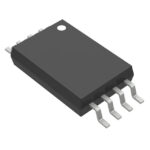 TPS2113APWRG4
The activity of extra discounts on wholesale prices is in full swing…
Please fill in your contact information and we will send you the latest wholesale price list.





