 ChipApex | Global Electronic Components Supplier
SEARCH
Search Product
Search Post
— IC芯片 | 连接器 | 传感器 | 被动器件 —
Search productSearch post
— IC芯片 | 连接器 | 传感器 | 被动器件 —
Consult the customer manager about the wholesale price.
consultation hotline:86-132-6715-2157
email:[email protected]
Contact the product manager for consultation. One-stop consultation is available.
Do you want a lower wholesale price? Please send us your inquiry and we will reply immediately.
The TPS2115APWR is an autoswitching power multiplexer manufactured by Texas Instruments, designed for efficient power distribution in portable electronics. It features a single output sourced from two selectable inputs within a compact 8-pin TSSOP package. The device operates on a supply voltage ranging from 2.8 V to 5.5 V and supports a continuous output current of 1.25 A. Key electrical specifications include a maximum on-resistance of 110 mOhms, a turn-on delay of up to 1 ms, and a turn-off delay of up to 5 ms. It provides configurable current limiting between 630 mA and 2 A and functions reliably across an extended temperature range of -40°C to +85°C.
Verify the specific suffix 'PWR' confirms the TSSOP-8 package and tape-and-reel packaging configuration. Ensure compatibility with the target PCB footprint and reflow soldering profile. Confirm that the operating voltage range aligns with the system's power rail specifications. Check for RoHS compliance documentation if required by regional regulations. Validate that the current limit settings meet the protection requirements of the connected load.
Select this component when automatic source selection based on voltage priority is required without GPIO intervention. It is suitable for applications where space constraints favor the small TSSOP-8 package over larger alternatives. Consider the 110 mOhm on-resistance for thermal management calculations. Ensure the input voltage sources do not exceed the 5.5 V absolute maximum rating. Evaluate the need for configurable current limiting versus fixed-limit alternatives in the TPS211x family.
The TPS2115A belongs to Texas Instruments' TPS211x series of power multiplexers, which are designed for low-power portable applications. This family includes variants like the TPS2113A and TPS2114A, differing primarily in pinout configurations and specific feature sets. The TPS2115APWR specifically utilizes the standard TSSOP-8 package, distinguishing it from other package options like the PW (SOIC) variant. It serves as a core component for managing power redundancy in battery-operated devices.
It uses internal autoswitching logic to continuously monitor both input voltages and automatically connects the output to the source with the higher voltage level.
The configurable current limit allows designers to set a threshold between 630 mA and 2 A to protect the power sources and downstream components from overcurrent conditions.
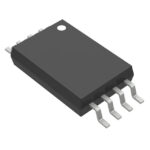 TPS2115APWR
The activity of extra discounts on wholesale prices is in full swing…
Please fill in your contact information and we will send you the latest wholesale price list.





