 ChipApex | Global Electronic Components Supplier
SEARCH
Search Product
Search Post
— IC芯片 | 连接器 | 传感器 | 被动器件 —
Search productSearch post
— IC芯片 | 连接器 | 传感器 | 被动器件 —
Consult the customer manager about the wholesale price.
consultation hotline:86-132-6715-2157
email:[email protected]
Contact the product manager for consultation. One-stop consultation is available.
Do you want a lower wholesale price? Please send us your inquiry and we will reply immediately.
The TPS51123ARGER is a dual-synchronous step-down controller designed for notebook system power applications. It operates with an input voltage range of 4.5V to 28V and supports output voltages from 0.6V to 5.5V. The device features D-CAP control mode, enabling stable operation with low-cost ceramic capacitors. It includes two synchronous buck channels and two integrated 100mA LDOs. Key specifications include a typical quiescent current of 550µA, a maximum duty cycle of 93%, and a switching frequency of 460kHz. It functions within an operating temperature range of -40°C to 85°C.
Verify the specific suffix 'ARGET' against the manufacturer's official ordering information to confirm package type and tape-and-reel specifications. Ensure compatibility with RoHS 3 standards and check for any recent product change notifications regarding material or packaging updates before finalizing procurement plans.
Select this component when designing systems requiring dual independent synchronous buck outputs combined with auxiliary LDO rails. It is suitable for applications needing wide input voltage ranges up to 28V and flexible output configurations. Consider the D-CAP control benefits for simplified compensation and stability with ceramic capacitors compared to traditional voltage-mode controllers.
This part belongs to Texas Instruments' TPS5112x series of dual-synchronous step-down controllers. It is engineered specifically for notebook and mobile computing power architectures. The series emphasizes high efficiency and compact design through integrated features and advanced control modes, targeting the demanding power delivery requirements of modern portable electronics.
The TPS51125A is a documented similar device offering lower quiescent current and adjustable soft-start capabilities. Designers should evaluate thermal performance and pin-to-pin compatibility if substituting, as package dimensions and electrical characteristics may differ between these related models.
It utilizes D-CAP control mode, which allows for stable operation with low-cost ceramic output capacitors.
Yes, it integrates two 100mA low-dropout regulators (LDOs) for powering additional system components.
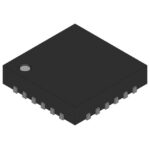 TPS51123ARGER
The activity of extra discounts on wholesale prices is in full swing…
Please fill in your contact information and we will send you the latest wholesale price list.





