 ChipApex | Global Electronic Components Supplier
SEARCH
Search Product
Search Post
— IC芯片 | 连接器 | 传感器 | 被动器件 —
Search productSearch post
— IC芯片 | 连接器 | 传感器 | 被动器件 —
Consult the customer manager about the wholesale price.
consultation hotline:86-132-6715-2157
email:[email protected]
Contact the product manager for consultation. One-stop consultation is available.
Do you want a lower wholesale price? Please send us your inquiry and we will reply immediately.
The TPS51285ARUKT is a dual synchronous step-down controller from Texas Instruments, designed for high-performance power delivery. It integrates two independent D-CAP control loops and includes built-in 5-V and 3.3-V low-dropout regulators (LDOs) for auxiliary supplies. The device supports switching frequencies between 400 kHz and 475 kHz with an internal soft start of 3.2 ms. It operates within an input voltage range of 5 V to 24 V and delivers up to 20 A per phase. Packaged in a 20-pin WQFN, it features comprehensive protection mechanisms including overcurrent, thermal, and UVLO.
Verify the specific suffix 'RUKT' corresponds to the tape-and-reel packaging configuration required for automated assembly processes. Confirm that the 'A' grade designation meets the intended operating temperature and performance specifications. Ensure compatibility with the target PCB footprint for the 20-WQFN package. Cross-reference the latest datasheet revision to validate pin assignments and electrical characteristics against current design requirements.
Select this component when designing systems requiring two independent high-current buck rails alongside dedicated low-voltage auxiliary supplies. The integrated LDOs simplify bill of materials by eliminating external linear regulators for logic or reference voltages. The D-CAP topology offers advantages in transient response and stability compared to traditional voltage mode control. Consider the maximum input voltage limit of 24 V when choosing input filtering components.
This part belongs to the TPS5128x family of dual synchronous step-down controllers. It shares architectural similarities with the TPS51285B but differs in quiescent current specifications and feature sets. The family is optimized for applications demanding high efficiency and compact solution sizes. Related evaluation modules, such as the TPS51285EVM, are available for circuit validation and performance testing during the development phase.
The TPS51285B is a documented alternative within the same product family. Verify functional equivalence regarding LDO outputs and control loop stability before substitution.
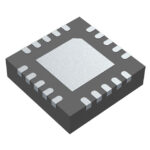 TPS51285ARUKT
The activity of extra discounts on wholesale prices is in full swing…
Please fill in your contact information and we will send you the latest wholesale price list.





