 ChipApex | Global Electronic Components Supplier
SEARCH
Search Product
Search Post
— IC芯片 | 连接器 | 传感器 | 被动器件 —
Search productSearch post
— IC芯片 | 连接器 | 传感器 | 被动器件 —
Consult the customer manager about the wholesale price.
consultation hotline:86-132-6715-2157
email:[email protected]
Contact the product manager for consultation. One-stop consultation is available.
Do you want a lower wholesale price? Please send us your inquiry and we will reply immediately.
The TPS5130PTRG4 is a triple synchronous buck controller manufactured by Texas Instruments, designed for high-performance power management applications. It integrates three independent synchronous buck controllers and an NMOS LDO controller within a single package. The device supports wide input voltage ranges and offers precise output regulation through integrated feedback loops. Key electrical characteristics include support for external MOSFETs to handle significant load currents, with switching frequencies configurable via external resistors. The component operates within standard industrial temperature ranges and utilizes a TSSOP-28 package for compact surface-mount assembly.
Verify the complete part number including the RG4 suffix to ensure RoHS compliance and lead-free status as specified by Texas Instruments. Confirm the package type matches the design footprint requirements. Check for any specific ordering prefixes or suffixes that may indicate automotive qualification or extended temperature ranges if required for the target application environment.
Select this component when a compact solution for multiple regulated voltage rails is required without consuming excessive board space. Ensure the external MOSFET selection aligns with the controller's drive capabilities and thermal requirements. Verify that the desired switching frequency falls within the operational limits defined in the datasheet to maintain stability and efficiency across the intended load range.
This component belongs to the TPS5130 family of triple synchronous buck controllers from Texas Instruments. It is part of the broader PMIC portfolio aimed at simplifying power design for complex electronic systems. The device shares functional similarities with other multi-phase controllers but distinguishes itself through the integration of an additional LDO stage, reducing the need for separate linear regulator components in mixed-signal designs.
Direct replacements include the TPS5130PTR and TPS5130PTRG4 variants which share identical pinouts and functionality. Cross-referencing with similar triple buck controllers from other manufacturers requires careful evaluation of pin compatibility and control loop parameters.
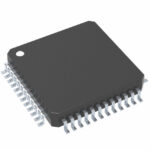 TPS5130PTRG4
The activity of extra discounts on wholesale prices is in full swing…
Please fill in your contact information and we will send you the latest wholesale price list.





