 ChipApex | Global Electronic Components Supplier
SEARCH
Search Product
Search Post
— IC芯片 | 连接器 | 传感器 | 被动器件 —
Search productSearch post
— IC芯片 | 连接器 | 传感器 | 被动器件 —
Consult the customer manager about the wholesale price.
consultation hotline:86-132-6715-2157
email:[email protected]
Contact the product manager for consultation. One-stop consultation is available.
Do you want a lower wholesale price? Please send us your inquiry and we will reply immediately.
The TPS61050DRCR is a synchronous boost converter designed for high-power white LED driving applications. It operates within an input voltage range of 2.5 V to 6 V and delivers a maximum output current of 1.2 A. The device features a fixed switching frequency of 2 MHz and supports a maximum output voltage of 5.5 V. Packaged in a 10-pin VSON (3x3 mm) format, it functions across a temperature range of -40°C to +85°C with a maximum power dissipation of 2.4 W.
Verify the specific package marking and date code against the manufacturer's latest datasheet revision to ensure component authenticity. Confirm that the supply chain source provides valid traceability documentation. Ensure the receiving environment meets moisture sensitivity level requirements prior to soldering. Cross-reference the ordering part number with the official Texas Instruments product selection guide to confirm functional compatibility with the intended design specifications.
Select this component when designing circuits requiring a compact solution for driving high-power LEDs from single-cell lithium-ion or alkaline battery sources. The 2 MHz switching frequency allows for the use of smaller passive components compared to lower-frequency alternatives. Consider the thermal performance of the VSON-10 package relative to the expected ambient conditions and PCB copper area available for heat dissipation during continuous operation.
This device belongs to the TPS61050 series of LED driver ICs manufactured by Texas Instruments. It shares core architectural similarities with other members like the TPS61050YZGR but differs in physical packaging. While the YZGR variant utilizes a DSBGA-12 package, the DRCR version employs a VSON-10 footprint, affecting board layout constraints while maintaining identical electrical characteristics and pinout functionality.
The TPS61050YZGR serves as a direct functional alternative with identical electrical specifications, differing only in the DSBGA-12 package versus the VSON-10 form factor. Designers must verify mechanical fit and thermal management capabilities when substituting between these package types.
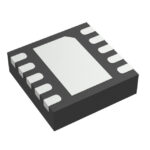 TPS61050DRCR
The activity of extra discounts on wholesale prices is in full swing…
Please fill in your contact information and we will send you the latest wholesale price list.





