 ChipApex | Global Electronic Components Supplier
SEARCH
Search Product
Search Post
— IC芯片 | 连接器 | 传感器 | 被动器件 —
Search productSearch post
— IC芯片 | 连接器 | 传感器 | 被动器件 —
Consult the customer manager about the wholesale price.
consultation hotline:86-132-6715-2157
email:[email protected]
Contact the product manager for consultation. One-stop consultation is available.
Do you want a lower wholesale price? Please send us your inquiry and we will reply immediately.
The TPS65262RHBR is a Power Management Integrated Circuit (PMIC) from Texas Instruments, housed in a 32-VQFN (5x5 mm) package. It integrates five output regulators: three synchronous buck converters and two low-dropout linear regulators (LDOs). The device operates with an input voltage range of 4.5V to 18V and supports a switching frequency of 600kHz. Output capabilities include adjustable voltages down to 0.6V, with current ratings of 3A for the primary buck, 1A for secondary bucks, and unspecified currents for the LDOs. It functions within an industrial temperature range of -40°C to +85°C.
Verify the specific suffix RHBR against the manufacturer's datasheet to confirm pinout and thermal pad specifications. Ensure compatibility with the target PCB footprint and soldering profile. Confirm that the 600kHz switching frequency aligns with electromagnetic interference requirements. Validate input voltage ranges against the system's power source characteristics before integration.
Select this component when a single IC solution is required to manage multiple voltage rails efficiently. It is suitable for applications demanding both high-efficiency switching regulation and low-noise linear regulation. Consider the 32-VQFN package constraints for thermal dissipation and board layout. Verify that the integrated features meet the specific current and voltage requirements of the target subsystems without external components.
The TPS65262 belongs to the TPS6526x family of PMICs designed for portable and industrial applications. It consolidates multiple power stages into a single chip, reducing bill of materials and board space. The RHBR variant denotes the specific tape-and-reel packaging format. This series is engineered to simplify power design by integrating control logic and protection features typically found in discrete solutions.
Consult the official TPS65262 datasheet for confirmed cross-reference part numbers. Verify functional equivalence regarding pinout, electrical parameters, and thermal performance before substitution.
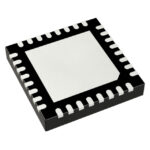 TPS65262RHBR
The activity of extra discounts on wholesale prices is in full swing…
Please fill in your contact information and we will send you the latest wholesale price list.





